
More Applicants, Less Clarity: Hiring Real People in an AI Assisted World
November 12, 2026
HR leaders from Sonder Research X and Avid4 Adventure share how they screen for real experience when AI-polished resumes and answers fill the pipeline.
AI is changing how candidates apply for jobs, what their resumes look like, and how they answer interview questions. For HR and talent acquisition teams, that means more applicants, but not necessarily more clarity about who’s actually qualified.
So how can you cut through the noise and identify the right candidates without adding more work to your hiring process?
In this SHRM webinar, Spark Hire’s Josh Tolan and Eva Rothwell are joined by Tracy Ward (Senior HR Director, Sonder Research X) and Tori Madsen (Talent Acquisition Manager, Avid4 Adventure) to share how they’re adapting their screening and interviewing processes in an AI-assisted world.
In this discussion, you’ll learn:
Why AI-generated resumes and automated applications are making it harder to identify qualified candidates.
How to use pre-screening questions and structured interviews to evaluate candidates more effectively.
Where to draw the line between acceptable AI assistance and AI-generated interview answers.
How to design behavioral interview questions that reveal real experience, critical thinking, and decision-making.
Practical ways to use AI to improve recruiting efficiency without replacing human judgment.
Specific screening questions you can start using in your hiring process.
Whether you’re managing thousands of applications or hiring for highly specialized roles, this conversation offers practical ideas for making your screening process more effective while keeping the human element at the center of hiring.
Great. Thanks so much, Tony. Appreciate the intro and setting the scene for us. And hello, everyone. Thanks so much for joining us for today’s webinar.
We know a lot of you are grappling with this topic on a daily basis. So looking forward to diving into a great discussion with our panel here. I know they have some solid takeaways and actionable tips you’ll be able to use today to gain clarity on how to hire real people in an AI assisted world. If you’re joining us and aren’t familiar with Spark Hire, welcome. We’re glad to have you here. Spark Hire helps HR and talent acquisition teams close the gap between recruiters and hiring managers with multiple solutions, including an applicant tracking system, one way video interviews, and a predictive behavioral assessment, all of which can be used together or separately.
We’ve been around since 2012 helping more than 10,000 customers.
Alright. Let’s introduce this great panel we have with us today. Joining us today, we’ve got Tracy Ward, Senior HR Director at Sonder Research X, along with Tori Madsen, Talent Acquisition Manager at Avid4 Adventure, as well as Josh Tolan, Founder and CEO of Spark Hire. Both Tracy and Tori are Spark Hire customers, by the way.
And I’m Eva Rothwell, head of marketing here at Spark Hire. Alright. Let’s dive in and get to this great topic. Tracy, I’d love to start with you. Tell us a little bit about your organization, your role, and the size and shape of your team.
Hi, so Tracy Ward and our company Saundra ResearchX, we are a small early stage biotech company and we are in North Brunswick, New Jersey. And we started our laboratories right during COVID, opened up our laboratory in New Jersey, during COVID in June 2020. And, we started with three employees and now we have 31 employees and we are in the process of using Spark Hire for our, for a hire that we have coming on now. And I essentially built our HR function. I lead lead our function and I do all of the recruiting. We may have have had one or two positions that required a recruiter just because they were so highly specialized. But generally speaking, I I manage that entire process.
Amazing. Thanks for that overview. Tori, tell us a little bit about what’s going on for you, your organization, your role, and what your team looks like.
Sure. Thank you so much. So Tory Madsen, an Angi Tom acquisition at Avid for Adventure, as well as our internal systems. Avid for Adventure, we are a multi state summer camp organization.
And what we do by that is we have a mission to empower youth to enjoy active lifestyles. And so we have close to 11,000 kids who go through our programs every year. And that means for us, we have to hire close to 600 seasonal staff every single year in an eight month hiring window. For us, I’m the only full time talent acquisition manager for our team, but I have a small team of three seasonal TA specialists. In a very short eight month window, again, we have to hire 600 people at a time. So, we are managing extremely high volume of applications close to 3,000 every year in a very short period of time. So, for us, speed, automation, efficiency is extremely important.
That’s why we enjoy Spark Hire as a tool as it does create that first step for us to have additional information from our candidates in order to move forward quickly once we get to a virtual interview to dig into their experience and be able to offer ideally at the end of the interview to move as quickly as possible.
Beautiful. Wow.
Thank you Yeah, for sharing Lee, it’s me, Eva.
Hey, everyone. Josh Tolan, CEO of Spark Hire. Tory, Tracy, thank you guys so much for being here. Eva did a great readout.
Tony gave a great welcome. So I’ll spare you the details on Spark Hire. But started the company about fifteen years ago. We are a little less than 100 employees, just to give everybody a sense of size here.
And our hiring’s pretty consistent throughout the year, and and we’re seeing a lot of the same things that, Tory mentioned in terms of volume of applications. And, yeah, just excited to dive in today to discuss it with you guys.
Let’s do it. Alright.
Tori, I’ll throw to you. I’d love to hear a little bit about what’s changed most about your applicant pool over the past year. Is it volume or quality? What’s that looking like at Avid?
Yeah. I’d say we actually saw… Started to see the impacts of AI actually for us in ’25, in 2024, should say, and particularly in 2025 where we saw a significant increase in the number of applications, but a lower conversion rates. We were starting to see a huge increase in the volume of people coming in the door, but not even getting through the first step of the hiring process with Spark Hired, which was the first flag for us that something was going on at the front of the pipeline.
Actually, we were able last year to start running some testing when it came to addressing AI candidates at the beginning of the pipeline. We started to see that very early on and did some projects around generative engine optimization for our job descriptions, for our hiring processes, being able to catch those AI or bulk applications early on. Catching fraud, catching bot applications pretty early.
We started to see those effects in even ’24, particularly in 2025 and in the past hiring season, we were able to significantly drop the number of applications by being able to do those changes early on in the pipeline. But we’re always chasing what’s happening. So I’m foreseeing that we’ll continue to have to iterate to get ahead.
Yeah, totally watch the space. Lots that I am definitely keen to loop around and talk to later in a recession. But first, Tracy, what’s that looking like from your perspective? What’s changed most about your applicant pool recently?
I would say echo the same sentiments as Tori 100%. The volume. So we hire PhD scientists, machine learning engineers.
So we have more of an high like Oh.
Tracy, I think we’re we’re losing you a little bit.
We’re we’re starting to have some problems with your connection here.
Okay.
I could jump in for a sec too, Eva, just to reiterate. So just like what Tory said, we’re seeing the same thing. I think it’s really been this wave that’s been coming over the last handful of years. For us, it started all the way back in COVID in terms of just the volume of applications that we started receiving.
Some of that was just a byproduct of the market. But then I also think once the workforce started distributing to more of a… Or changing to more of a distributed model, we just started seeing a lot more people applying because they’re applying from everywhere. The location didn’t really matter as much. And I know that’s maybe not the case for some companies that are on-site.
But that definitely what started leading to a huge spike of applications.
Also, for years, I feel like the industry is really optimized for easy apply, so making it as easy as possible for people to submit applications for roles, which is not something we necessarily want to get away from. But I think the converging forces of a lot more people applying, it’s really easy to apply. And now we have this challenge of tools that are out there that are making it an automated process to apply, and AI is making it way easier for applicants to personalize their resume against the job description. So you have this perfect storm of a lot of people applying, a lot of automatic applications submitted where candidates don’t even necessarily know they applied. And then even for candidates that do know they applied, a lot of them look very similar on paper because they’re all using the same LLMs against the same job description to optimize their resume. And so it creates this really big conundrum at the front end of the process.
Not only do you have volume, but you have everybody that looks alike on paper. And so if you want to consider all those people that are qualified on paper, that leaves you with somewhat of a capacity challenge and some decisions to make on how you handle the next step of the process.
Yeah. Totally. Thank you, Josh. Tracy, I’ll throw back to you. We lost you for a second there.
Most of what All you were saying got cut good. Looks like you’re back. Tell us a little bit about what’s changed in your applicant pool.
I would echo exactly what Tori and Josh have stated, you know, seeing the same things. We do have, as I was stating, little bit more specialized of an applicant pool that we’re looking at PhDs, generally speaking for most of our positions, even our, machine learning engineers, you know, we may be targeting, you know, obviously master level and sometimes above that.
And I think what we also saw in 2025 was just this influx of applications of individuals whose resumes mirrored our job descriptions.
So that, you know, that was the challenge, but I feel like Spark Hire and and some of the tools that you have in the platform allow us to just significantly cut down, the noise of of all of that.
That’s great to hear. Thank you. All right, I’d love to hear what that is looking like for everyone joining us today. Toni, let’s go ahead and grab that first poll and drop that in.
Tell us if you’ve… If you’re joining us live today. In the last twelve months, what has happened to your application volume? Up, down, or flat? Let us know what that’s looking like from your perspective.
Curious to see what what our audience is experiencing here.
We’ll leave that up for a couple more seconds.
Alright. Tony, let’s grab those results and see what our audience is experiencing here.
Okay.
Alright. So we’ve got a tie between up significantly or up slightly. So regardless of where you fall here, it looks like over 75 of our audience is experiencing an increase of some sort. So that’s a great segue. I’d love to talk about volume.
Theoretically, applicants would mean more choice, but we often hear from our customers that that’s not always what most echoing what you were saying with your with your answer at the beginning there, Tory. That’s not what everyone is always seeing.
So let’s talk a little bit about that.
Candidates can obviously tailor a resume with AI in seconds now. So are you seeing more qualified people or just more people who look qualified on paper? Tracy, let’s start with you.
Yeah, I would say applicants who look more qualified on paper, like remarkably qualified.
So, I think what we’ve done in using the pre screening questions, you know, during that early stage of the interview process and really tailoring pre screening questions to knockout if they don’t have certain experience or skills that we’re requiring for the role, we use the knockout questions that just eliminate them from consideration, because they’re knocked out.
But then we have them answer some questions to sort of explain some things or experiences or skills that they’ve listed in their resume. So, we have seen a lot of candidates who who look qualified, but I feel using the tools earlier in the process can can help reduce some of that, that volume from coming to you initially.
So you’re tweaking how you use the tech in the screening process to really validate the things that you are looking for and then help weed out some of the lookalike candidates in the process or potentially less qualified candidates.
It’s significantly helped. For example, we in this process, in the interview, or I’m sorry, the job posting we have that we posted last Tuesday. So it’s been up eight days.
We’ve received, it’s a high level position, PhD, but a high level leadership position. We received 40 applicants and maybe 10 came through my way, 10 to 12. So there were a bunch who I never even saw because they did not meet qualifications. So using that technology and the tools there to really hone in on what we’re asking for in the job description, and then weeding out those who don’t answer accordingly to the requirements.
Right.
Tori, what’s that look like from your side? You mentioned the increase in volume, decrease in quality. So I’d love to dive in a little bit to what changes you made to your screening process.
Yeah, of course.
And also I just want to make a note too, we hire a lot of Gen Z who are very AI native.
So we do see a lot of catered resumes. So I’ll find if you look at them sometimes funny, you’ll still see the prompt at the top of the resume because they’ll just copy and paste it, which I always find amusing. For us, going back to what Jocelyn about, a super streamlined application process because we are working with a broad range of potential candidates. We made our hiring process exceptionally streamlined to move quickly.
But because of that, it does lend itself to a lot of AI bots applying because they can just select a ton of different skills that we’ve made as part of our application process, just like multi choice or checklist.
And then we move them to the next stage of a one way interview and they don’t even complete it. If they do, at first we were saying that was a really good catch because people would get to the interview and they couldn’t even speak to the skills that they selected.
What’s interesting is in this past year, we were starting to catch that. What we’re starting to see now is that some of those questions we had built to try to catch those candidates, being able to answer some technical things in the one way interview. Now we’re starting to see people who are using the one way interview, copying the questions, throwing that into AI to create a very polished interview answer in the one way interview. And then they come to the virtual interview and now we’re saying that they aren’t able to speak to that question.
It’s been interesting to see the movement of how AI is being used in interview process.
For us, one of the things we’re doing is we’re really trying to think about tweaking even that first step of the one way interview and moving away from maybe some of the technical questions we leaned on in the one way interview and trying to cater more towards a conversation.
I’ll use an example of that is that for us, we have certain technical skills. I imagine if someone’s going backpacking in the woods for a week, no contact with a group of folks, there’s a lot of dangers, a lot of risk management involved with that.
If people are making up answers, that could be a serious danger or even potentially life or death depending on the circumstance. So we have to have a really high bar there. So instead of asking about the technical aspects in the one way, it’s shifting to questions like, tell me about got you really excited about the outdoors. Tell me about some of the adventures that you’re going on right now.
What are some of the trips you’re going on and who are you planning with? And if anyone knows anyone who is a huge fan the outdoors or a marathon runner or a rock climber, they know they would just love to talk in-depth about their passion. Shifting away from some of those questions that might be researchable as part of your process, turning it more into a one way conversation so that we can use those answers to have that robust discussion in the virtual interview that people can’t, we can refer back to here’s this eventually when I tell me about the gear that you brought, what’s some risks that you came across, things that you can’t really make up in a virtual interview.
Because it’s referring back to potentially their catered answer in the one way.
Love That’s a really interesting point.
So I think a lot of companies can learn from that on the front end of the screening process, less focus on questions where there’s a right or wrong answer. Now, of course, sometimes you just need that at the front end of the process. Like Tracy said, maybe there are some of those things that are part of your knockout questions on your application. So those people don’t get to a screening because they just don’t meet the required criteria for the role.
I But think once you start screening candidates, you can get a lot more context when you ask more open ended questions where they actually have to give real world examples from their experience or in in in your case, Tory, maybe some upcoming experience or things they have planned it allows them to be a lot more authentic, but then it allows you to get a lot more context on the candidate in an authentic way. Because I think sometimes when companies put too much emphasis on like right or wrong, reject or don’t reject, and ask those types of questions, you tend to get those types of answers back in the sense that candidates know you’re looking for a specific answer.
And so they’re gonna try to do everything they possibly can to give you the right answer to that question. But if it’s framed in a way where it’s not really right or wrong, it’s just giving the candidate an opportunity to add more context to their resume, I think that’s where you’ll get a lot more insight at the front end of the process, and that’ll help you make a decision on do we move this person forward to, you know, a a manager interview or whatever the next step may be.
Yeah. I’m really loving the variety of roles that everyone on this panel is hiring for. We’ve got on Tracy’s end, biotech, data science, med tech focus, and on Tory’s end, we’ve got camp counselors and backcountry guides. So, really cool spread and different dynamics in how each of you are, evolving your screening process to reflect getting what you need.
Eva, can I go in and say one more thing too? Sorry. Don’t mean to cut you off. I just think I think you also just brought up a good point, and I think it’s…
We’re all recruiting for very different positions. We’re all in very different companies, and we have very different teams. But if you look at the dynamics, they actually end up being pretty similar. Like, in Tory’s case, she has a capacity challenge of seasonal hiring.
A small team has to hire a ton of people in a short period of time. In Tracy’s case, she stood up the entire HR function. Recruiting is just part of what she does. And so in both situations, there’s this capacity challenge.
And so I think it ties back to the conversation when it’s like, okay. A lot of your capacity is being eaten up by the front end of the hiring process, and you have all these other things to do, whether it’s hire all these people or all these other HR responsibilities. That’s where you have to start to get creative to look for solutions that is going to free you up to focus on what you actually really, really need to focus on.
Yeah. Absolutely. Great call out. Alright. I wanna move on to talking a little bit around the answers that are given during the interviews and where we are all drawing a line of what’s acceptable in terms of using AI around that.
What is that looking like for each of you? I mean, if a candidate uses AI to prepare or polish an answer, is that cheating? Tori, you mentioned Gen X, Gen Z, like, is that cheating or is that just the new normal and the new landscape? So let’s start with you, Tori. Where do you draw that line? What is that looking like for you in that actual interview environment?
Yeah, totally.
I think for us, like the hard line is anything related to risk management. Like it’s hard pass if someone’s using it for something that again could be a significant issue. That’s like a no go for us. But again, we’re also working with people who maybe, we’re working with like a different demographic, whether they’re younger or they’re not necessarily in a more professionalized industry. So they don’t have the experience of how to answer sometimes like, tell me about a time when question. So maybe they need like a little bit of help with workshopping that answer.
That for us is something where we’re like a little bit comfortable because they’re new at having these sorts of conversations where it becomes, I think a deciding factor for us. I don’t know how to say this more gently, but when people are using AI to outsource their critical thinking skills, that’s become it becomes a challenge. So for that’s something that we’re working on as a team to identify how do we catch those things because that inability to have critical thinking skills is something that we see play out in the workplace with our customers and our camps that we run.
Yeah, right. Because in the examples you shared, the ability to think on your feet is really gonna be critical. It could be a life or death situation genuinely. Makes sense. Tracy, what’s that looking like for you at Sundar Research X? Where do you guys draw that line?
So similar position to Tori.
We have a balanced position about that. Candidates have always done research on websites. They’ve practiced interview questions.
So this isn’t new, right? This concept. So AI just really becomes another resource for applicants to use.
And again, I agree 100% about the critical thinking skills when you farm that aspect out to AI. And I think it just boils down to when does the technology start to replace the candidate’s own knowledge or experience?
So if they’re using it to organize their thoughts, I… I’m okay with that. But when we ask questions, we need to know what they know, how they think, because that’s who we’re hiring. We’re not hiring an AI, tool. We’re hiring them. So I, you know, I use AI as most of you probably do every day, all day. And I use it almost as a as a… I’ll say a weapon, an offensive weapon to handle what’s coming in on the other side of AI to us, if that if that makes sense.
So… It does.
I…
We use it. We use it. I use it all day. So I think we just have to understand that AI is here to stay, and it’s only going to, you know, pervade even more into our lives.
So we just have to understand how people are using it. And again, can we separate what this person has done? Can they defend their decision making? And do they know how to apply their skills, knowledge, and experience to the role and the key responsibilities that we’ve outlined in the job description?
That’s what we wanna know.
Josh, a lot of nodding happening over there. Anything you’d like to add to that?
No. I mean, I I think I’d agree with with both Tori and Tracy. And I think, like what Tracy said, people have been told to personalize their resume for as long as people have been submitting resumes. So nothing about that is new.
There’s just new resources, as Tracy said, for people to use to help them with that. I think at the end of the day, both sides just have to remember that we’re all in this for a long term good fit. If we’re just using AI, if I’m a candidate, I’m using AI just to get myself to the next step of the process, it’s probably a fool’s errand. Right?
Because at the end of the day, even if I get the role, it’s like I wanna stay in the role. There’s no benefit to me as a candidate if I get the role I can’t do what I actually said I can do. And then obviously, there’s no benefit for the company. So I think it’s like, if we can just anchor the candidate on that of like, we’re we’re in the pursuit of a good fit.
We don’t mind if you use AI for these types of things. But anytime AI gets in the way of your ability or gets…
Or is helping you embellish your abilities or gets in the way of us being able to have you demonstrate those abilities, you know, that’s that’s when it becomes a challenge. Like, anytime when it poses a risk to, like, the long term fit, I think, is where we have to draw the line.
Yeah. Totally. A lot of alignment here from very different perspectives with our panel. I’d like to understand what that looks like for our audience. So, Tony, let’s go ahead and drop in that third poll.
And if you’re joining us live, tell us how your organization is currently handling AI assisted interview answers. Are you detecting it, flagging it? Have you redesigned your process like our panel has talked about? Have you banned AI use outright, or are you still in the process formally addressing that? Let us know what that looks like from your perspective.
And let’s go ahead and see what that result is. Very curious to see what our room has to say on this. Let’s go ahead and drop those results in, Tony.
Okay. So a lot of people here today, very much still in the research and investigation phase on how to address this. This is a emerging relatively new challenge for a lot of us. So hopefully, what our panel has to say will really help give some inspiration for the 67% of people who said that they’re still working on figuring out how to address that.
There’s really no single playbook. So I’d like to shift this discussion to talk a little bit around screening to make sure that you’re getting the real person behind those answers that you’re getting. So, in the theme of faking things with AI, what kind of screening questions are hardest to fake with AI and what makes a question reward real experience over a polished answer? Tracy, let’s start with you.
For us, we’re asking more behavioral questions that require them to answer, for example, a project that didn’t go as planned. So what happened? What was your responsibility? What did you do to, you know, to…
What did you change in that process? So it has them describing their…
You know, how they think about a problem or project that they approached and walking us down the thinking and the actions that they took, which you’re just not gonna be able to do that with an AI generated answer. Like you can’t come up with that on the fly. And if you do try to do that, let’s say like on the fly, you get the question and somebody’s typing it in, it’s going to be evident that you’re reading the response. So I think very quickly, I’m letting our interviewers know if you detect people reading answers to some of these kinds of questions, that’s a no, because you’re not answering from your own resources.
And then I think really good follow-up questions, what specifically led you to that type of decision? So, asking really specific follow-up questions, what alternatives did you consider? Looking back, how would you approach that problem differently?
So I think when we started getting into those kinds of questions that require them to answer really specifically out of their resources of experiences, digging in their bag of experiences, you can tell who authentically answers those questions and who’s reading a screen or who can answer it. They give very shallow answers.
So I think once you start asking those types of questions, and the good news is we can use AI to help generate very effective questions that get a candidate talking. So, that’s the advantage I feel we have is we have a tool that can help us looking at the job description, what types of behavioral based or experienced based questions can we ask to elucidate specific skills, experiences that they’ve had in their previous roles?
Yeah, big emphasis I’m hearing on behavioral questions and really aligning those with what your core needs are in the role. Tori, what about you? You mentioned seeing candidates use AI generated answers later in both in screening, but later. So what tweaks did you make to your process to help solve for that?
Yeah. So, you know, for us again, trying to really focus for us on storytelling, as mentioned behavioral, whether it is more personalized stories. This is unique to our industry as well. Like I conscious that like some of the professional stories that are applicable to other teams might need a little bit of like adapting.
But for us, a lot of what we do, people want to work at our camps because they’re deeply passionate about working with you through the programs that we’re doing or our mission. And so trying to tap into those passions of the types of questions we ask. I think for the one way interviews, it’s kind of a pretty big tell if you’re asking certain questions, they’re supposed to tap into the things they’re passionate about and they have just a flat affect about it. Or they look like they’re looking at a screen or people will look away from the camera, which is interesting.
Don’t know if they have something elsewhere or they’re like running through a script in their head versus really speaking to us. Those are things that we can flag, particularly if one way interviews.
Then continue to think about, we have these one way interviews, the types of answers I get. Continue to think about how do we dig into those? Tracy said about asking more specifics as a follow-up. People, you have to be able to think through those things on the spot.
So that’s something we’ve been looking for is how do we get that evaluation of people’s passion for what we do and in our industry to better track to see who might be making up answers using AI. And it’s interesting too is just yesterday, one of my teammates is doing a little bit of research on candidates using AI in interviews and started getting fed on Instagram of all places, advertisements for tools for candidates to use AI. Now those technologies actually pushed potential candidates to advertise how they can help with those interviews. So I encourage everyone here to stay on top of it by looking to see what technology people are using, starting to follow those tech and tools online to get ahead of what people are actually doing on the back end.
Yeah. I like that. I think we’ve done a couple of things. I think in the screening process, we try and do a good job of setting expectations for candidates up front on what our expectations are in terms of using AI or not using I… AI just based on, like, the last question we were just talking about in previous discussion. And then, with some of the stuff that we use, we do some AI proctoring, which helps us look for, like, unnatural language used because a chat GPT generated and read answer is going to be very much different than how a candidate would say that answer in a conversation. So some of those flags are pretty easy to pick up on as well. But I think really probably the biggest place of emphasis for us and where a lot of teams that I’ve talked to are focusing is really like way, way earlier in the process, like all the way back to the hiring manager kickoff.
And just thinking about what does the work actually require so we could design questions that are behavioral or hypothetical that actually get the candidate to speak to their experience or what they would do in certain situations that are related to the work. Like, it’s never been easier to check all the boxes of the legacy job description that we all used to write of like, oh, they need five years of sales experience. It’s like, okay. Well, anybody can say on their resume they have this experience.
You could see the years of experience on their resume, but that doesn’t really speak to what they actually did in a role. And I think now from a screening perspective, we really have to get clear about what have they actually done. What does that experience actually mean? And how does it relate to what they’re gonna be required to do when they’re in our organization in that role?
So I think for us, that’s been a big shift is we really have to get a lot more clear about what we’re looking for because that helps us design a lot more thoughtful questions versus maybe some ones that were a little bit more generic in the past.
Yeah. That intentionality and really getting away from any sort of fluffiness in the screening process. The benefits are just gonna compound as they flow downhill and as you as you get further along in that hiring process.
I wanna talk about the line between AI and and human judgment. We talk a lot internally around AI helping you hire, but not hiring for you. So I’d love to hear from each of you on an example of where you’ve drawn that line internally within within your own hiring processes. What do you let the tools handle and what absolutely must stay with a person? Tori, let’s start with you.
So I think something for us that’s a little bit unique is, again, because we’re in the outdoor industry, we actually have to deal with a lot of people, one who are using potentially AI because they are more AI native, but also people who are extremely skeptical of AI. And so especially with a lot of the laws, they move forward. So California, Colorado and Delaware all have laws being in effect January 1 around disclosure of AI in the hiring process. I believe there’s three other states that already have laws on the books around AI use and disclosure to candidates. So for us, it is like a challenge that if we decide to implement AI internally with our processes, we could actually be in our industry pushing people away.
So for us, in terms of AI, like one of the ways that we have chosen to use it to avoid some of the decision making process is one we actually use in Spark Hire. There is a flag regarding potential AI references or like catching the same VPN. So we use that for our reference checks, that AI tracking once a hire has been made. So that’s been a huge benefit for us for catching people who might be submitting faulty references.
We also use that to build for us talent reports of candidate pools that we’ve developed to be able to effectively sort a list of candidates who’ve already applied with us in the past to see if we want to reengage with them. So building that candidate reengagement for candidate pools who haven’t considered in the past.
For us to like being able to use AI internally to help with drafting those interview questions.
So for us internally, we do not use it as part of the formal evaluation process of the candidates just given where we are. But we use it with everything operationally on the outside to make our lives easier.
I like that. Not not outsourcing judgment, but, like, taking a very creative lens, like the candidate reengagement pool you talked about to think about how you can deploy the tech. What about you, Tracy? What’s that looking like over at Saundra Research?
So we’re using it to help us work more efficiently and effectively, and definitely not in terms of making any hiring decisions like that. We’re so far down the road by the time that happens that we have, I’m gonna say squeezed a lot out of our applicants from the very beginning screening questions, the pre screening questions, the one way interview questions. We do use AI to sort of build a logic on where we start with the pre screening, so that we’re not asking the same kinds of questions from stage to stage. So, we’re building on that early information they gave us, and then we come with a different set of questions in the one way interview process, And then we build again on the job description for the the first and the second. And what we’ve now incorporated are technical assignments as the stage before they would get to a final interview.
So in the technical assignment, what we’re doing is crafting something that’s going to require them again to dig into their their, experiences at their previous roles on how they tackled a particular project.
Like last, month, we brought on a regulatory person and we gave them an assignment. We told them we don’t want you spending any more than, you know, ninety minutes on this. You may use AI. So we even told them, you know, that, you know, feel free to use it. We don’t want you working on beautification of your presentation. We want like four slides, just walk us down through some of these questions and they will present that to the team.
So they can use AI if they want to, but it’s gonna fall apart really quickly because in the Q and A session, when we do a follow-up question with them about X, Y, or Z, right away, you can tell who has the authentic experience versus the one who’s prepared their responses through AI. So we’re incorporating even in our scientist positions, like we have one now, I’m building an assignment that’s going to cause them or force them to come up with something to describe what they’ve done, how they approached it, and they’re going to present it. And it seems like this may not exactly be related to this question, but it seems like that would be the employees would feel so exhausted by the time they got to the final interview.
But what we found is that because we crafted this whole experience so carefully, the candidates became excited about the process along the way. Like we get thank you notes, oh, that was such a great, you know, those were great questions, blah, blah, blah. And then when they did the assignment, both, you know, the two candidates who ended up as our final candidates where they said this assignment in meeting with the team made us even more excited about the role. So they weren’t exhausted by the process because I used AI quite frankly, to create a really thoughtful process that builds on the knowledge about the candidates.
So that when we do get down to that final interview with our CEO and maybe another executive, they’ve been so well vetted that I I think it’s just creating a better process. And then, you know, down that…
After that stage, we’re not using AI. It’s it’s our encounters with that person and how they answer those questions. So we use it, I think, little bit earlier, like a lot earlier in the stage. And when it comes down to the hiring, it’s really looking at these people for how they presented themselves and how well they answered questions in the interviews to make those decisions.
Love that. I’ll throw out an example. I mean, in the spirit of the webinar title about clarity, we actually use it a lot with hiring managers to support hiring managers. So if we think about three different stages, the intake AI has been super helpful because we can just have a good conversation and focus on the conversation with the hiring manager about what they’re looking for. And using AI, we’re actually able to use that conversation as the source, which helps us update a previous job description or write a new one because we’re able to just focus on asking the hiring manager really good questions.
We also use it in the interview process as a notetaker, which is, of course, really helpful for a recruiter that’s running the process, but even more so for a hiring manager who, a, isn’t writing interview evaluations all the time. They’re an infrequent hirer, so they’re not doing this all the time. It’s not like a muscle they’re working every single day.
And so oftentimes, you would get really shorthand notes from a hiring manager or feedback submitted a couple days later because they had to run off and do the next thing in their day to day. So the notetaker has been super helpful in almost helping them, like, not start from a blank page after a conversation. And so that allows us to get a lot more thoughtful feedback after an interview, which brings clarity to the process. And then we can use it as part of the debrief process when we’re talking about a few candidates and we’ve got all these interview evaluations submitted. We can use AI to help us easily prepare for a debrief but also stack up these candidates side by side based on all the feedback that’s been submitted about them throughout the process.
So for us, I, you know, I find that to be a really, really good use case because that’s one of the biggest challenges I think every team is facing is how do we empower empower our hiring managers and help them to get to clarity.
And so that’s been a big, big emphasis for us in the use of AI.
Some really good examples in here. I like this. This…
These examples on, like, not just asking people the same questions at every step, but how we can use the tech to build a more creative, a more thoughtful process. And sounds like from your perspective, Tracy, even one that candidates are actually enjoying more, so creating a more human focused hiring process. I’d love to hear from our audience. Let’s drop another poll in.
Tony, can you drop in that fourth poll? Tell us where you’re most comfortable relying on AI in your screening process today.
If you are using it, what does that look like? Where are you comfortable outsourcing, or are you still figuring it out? Let us know in that poll.
And let’s go ahead and pull those answers up, Tony. See what people have to say here.
Eva, if we could give folks just a few more seconds to vote.
We just Okay.
They’re they’re a little behind us.
Wanna make sure Okay.
We have a nice little sample size for us.
Alright. We’ll leave that up. I’ll continue. We’ll revert back to that, in just a second when we when we have a little more data.
As folks are filling that out, I’d love to move to, like, really tactical fixes. So, for people here with us live, I’m sure everyone’s keen to know, like, what can I change next week? What is something that I can really specifically action in my hiring process next Monday? So rapid fire, we’re just gonna do, like, ten, fifteen second answers from our panel and let us know what that looks like from your perspective.
So, Tori, let’s start with you. What’s one quest screening question that you tell every team to add tomorrow? So when I want to add a screening question, what should they be adding ASAP?
Yeah.
So I think something that we are implementing right now, and again, this is trying to get ahead of anything that might be a catered AI answer, is we’re trying to start asking some questions about things that they’re passionate about outside of the job description. So, in the workplace outside of this particular job description or your previous roles that you’ve really loved doing and are excited about bringing to the table.
So that could be something that end up being a culture element or some ideas they might have or projects they’ve done in the past that are catered to the actual resume, but can give you an idea of who they are in the workplace. So that’s something that we’re looking to cater and bring is getting more about who this person is outside of just the job description.
Nice. Yeah, getting that flavor upfront. Tracy, what about you? What’s a single question you tell everything to add tomorrow?
Oh, you’re on mute.
Alright. There’s my one mute.
There’s your one.
There’s my one. So tell me about a decision you made that had a meaningful impact on a project or organization. What was your role?
How did you approach it and what was the outcome? So those again force the candidates to really think about their impact on a specific project or goal and how they approached it and what was the outcome. It also tells their level of thinking too. Can I quickly organize my thinking around answering concisely these questions, or are they all over the place? And that’s not necessarily a reason alone to, you know, give that person a bad mark. But, you know, if you’re like for our organization, we operate under a lot of ambiguity and a lack of information.
So we have to be able to think quickly through a problem and assess a problem, come up with a solution with that thing, you know, on how we’re going to approach it. And we need people who are sharp and can think through those things and articulate those things well.
Nice. Okay. So for people taking notes, Tracy and Tori just gave us some really good ones there. Josh, what about you?
I always like to wrap up a screening in any format of asking what’s something that we didn’t ask you that we should have asked you and how would you answer it.
And I like asking that at the end, because I think it really allows a candidate to speak authentically about what we missed, what they think we should still consider, what part of their story they didn’t get to tell. I think with candidates that maybe fluff their way through the interview, they tend to answer… They tend to ask things like, I would ask, why am I a great fit? And then they’ll give you some generic answer. But I I I find that candidates that have really put a lot of thought into the interview and have been answering authentically, they always have something they wish they would have said in a previous answer that they’ll circle back to where they’ll add more context on. Or there’s something else about their story they didn’t think it touched. And so I think that really brings a lot of light, a lot of clarity to the candidate’s qualifications, qualifications, the the experience by just wrapping up with something like that.
That’s super cool. I love that. I see you writing it down over there, Tracy. So we’re all taking notes here. This is great. We’ve all got some some take… Takeaways here.
Alright. We are getting close to time, so we’re gonna start to enter the conclusion of this. I wanna drop another poll on the screen.
If what you heard today from Tracy and Tory resonated, we’d love to show you how they’re both using Spark Hire for their hiring processes.
Tony, let’s go ahead and drop in that poll.
If you’re interested in learning more, just select yes, I’d like a demo, and someone from our team will reach out to get that scheduled.
And as a bonus for SHRM guests, after you complete that demo, we’d love to send you a $50 gift card as a thank you for our time. Just make sure you have a valid work email that you’re using when you register for this demo.
So let us know if you’re interested in learning more, and we will absolutely follow-up with you. Alright. Really solid takeaways. Some great discussion from our entire panel today. I’m gonna go ahead and throw over to Tony for some wrap up announcements.
Thank you, Eva. We do have a couple of wrap up announcements to share with you, including information regarding the SHRM PDC you’ve earned for joining today’s program. First we want to thank today’s webinar sponsor Spark Hire and also take a moment to tell you a little bit about them. Spark Hire is an applicant tracking system built for organizations with 50 through 500 employees where hiring must be treated as a repeatable operation. Many teams rely on spreadsheets, email or rigid HR software that make hiring manual, fragmented, and hard to coordinate. Spark Hire brings everything into one place with flexible workflows, automation, and AI so your team stays accountable, moves faster, and hires better together.
Want to see it in action? Head to Spark Hire.com. We’d also like to share with you information regarding the SHRM PDC you’ve earned for viewing today’s program. We’re displaying that code for you to take down here on your screen.
Don’t forget to claim your PDC. With it, you’re one step closer to the 60 credits you need for recertification. Visit your SHRM certification portal at portal.sherm.org to manage your progress and keep your SHRM CP or SCP active.
We’ll be shutting down we’ll be shutting down the program window in the next thirty to forty seconds. You have that time to finish completing that last poll or to take down your SHRM activity ID. Next, if you’re viewing today’s program live on the date of its original broadcast in a post webinar email, you’ll also receive a link to complete a post webinar survey. We hope you’ll take a few moments to fill out the survey.
It helps us assess this event and plan for future ones. Before we sign off, we want to thank today’s amazing featured presenters, Tracy Ward, Josh Tollen, Tory Madsen, and Eva Rothwell for all the actionable information and thought leadership they’ve shared today. Finally, we want to thank you, our audience, for tuning in and for choosing SHRM for HR webinars. Eva, are we clear to sign off?
We are good to go. Thank you so much, everyone. Thank you, Tony.
Thank you, everyone.
Take care.
More Webinars
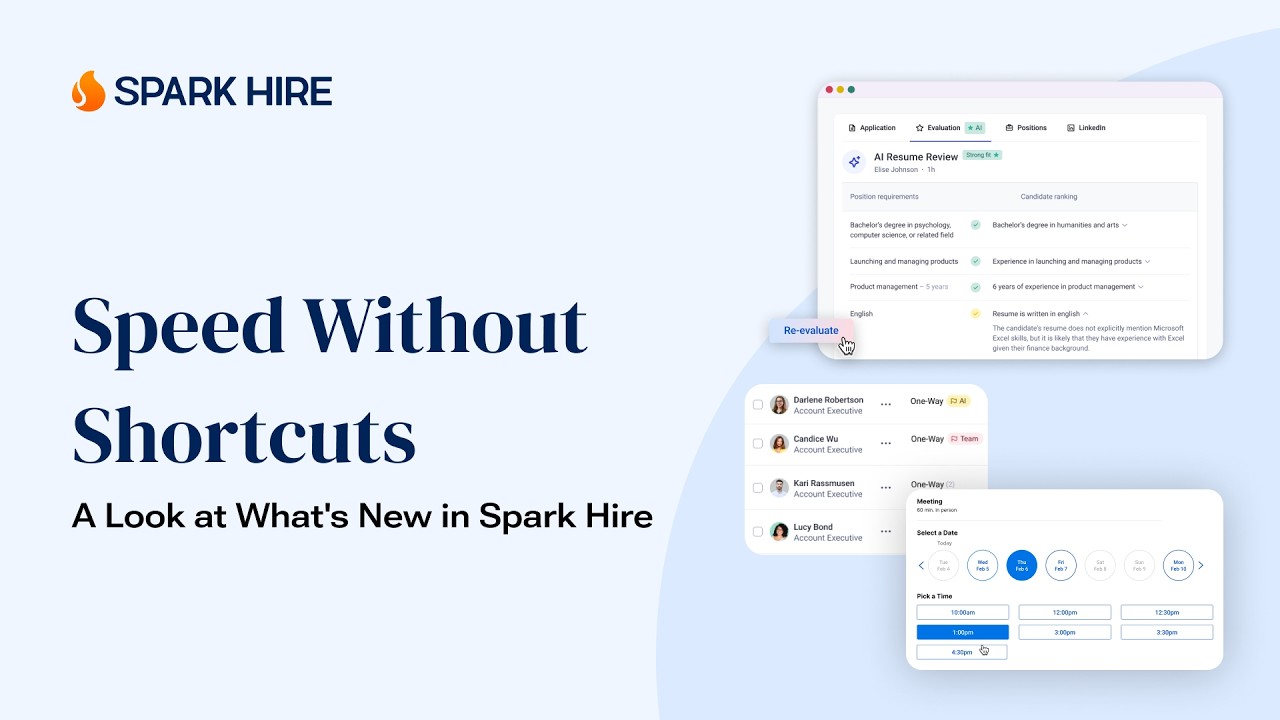
Speed Without Shortcuts: A Look at What’s New in Spark Hire
See what's new in Spark Hire: smarter AI resume ratings, less scheduling overhead, and clearer assessment review, all in one live walkthrough.
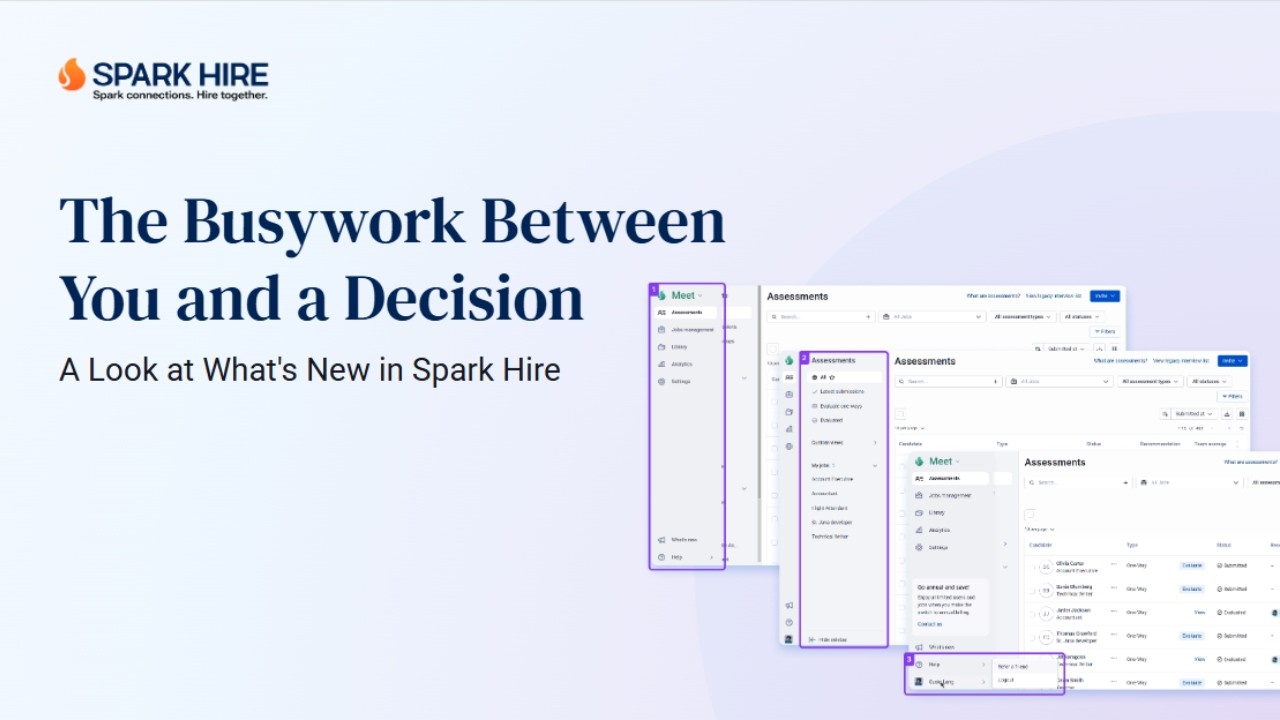
What’s New In Spark Hire: Less Busywork, Better Hiring Decisions
Spark Hire's Alisha Garlow and Ori Horvitz cover new updates for less manual work: smarter resume ranking, automated references, and AI interview sets.
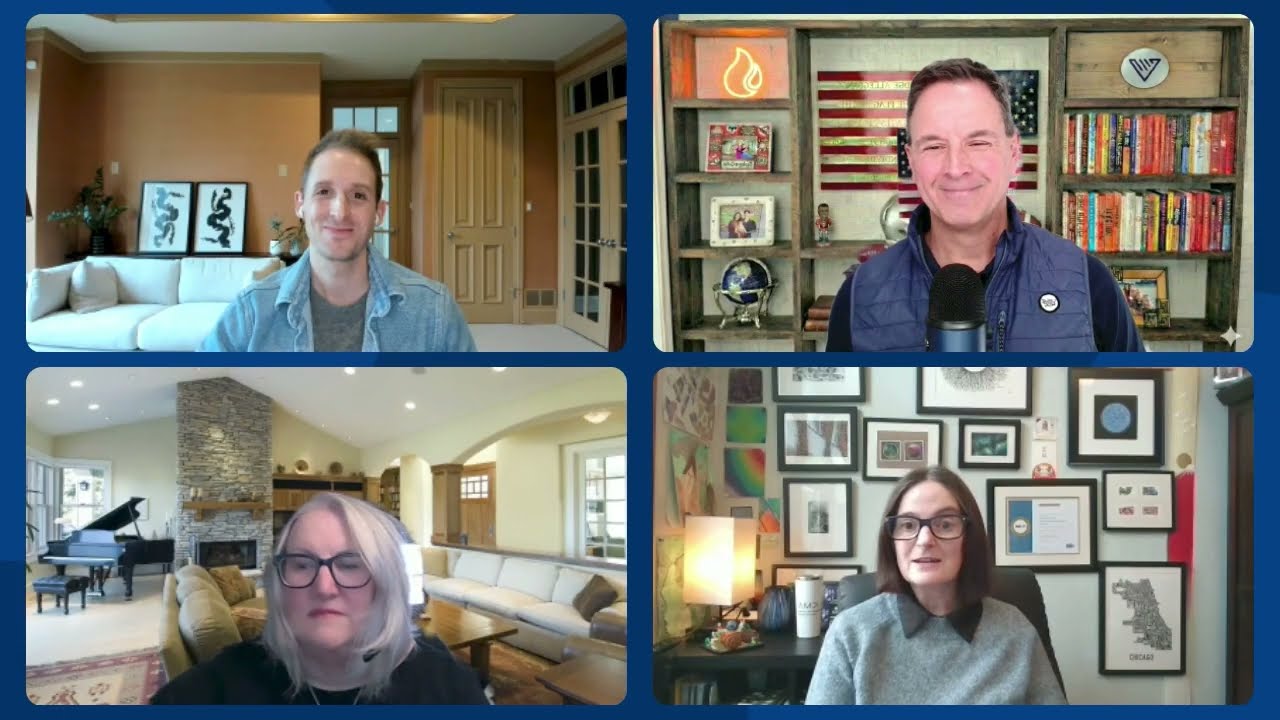
How SMBs Build an Intentional Hiring Process that Protects Trust, Clarity, and Team Capacity
As SMBs grow, hiring often turns reactive and inconsistent. Watch two hiring leaders share how to build a process that protects trust and team capacity.