
Scale + Soul: How to Grow While Preserving Your Culture
May 12, 2026
Scaling through acquisition can quietly erode culture. Hear Erin McAuley and Julie Spence of Springline Advisory on using hiring to keep it intact.
Scaling a company doesn’t just test your systems.
It tests your culture.
As organizations grow, especially through acquisition, it becomes harder to maintain what made them successful in the first place. Processes change. Teams expand. New leaders join. And without intention, culture can drift.
In this episode, Josh Tolan (CEO of Spark Hire) sits down with Erin McAuley (Chief People Officer at Springline Advisory) and Julie Spence (Head of Talent Acquisition at Springline Advisory) to discuss what it really takes to scale a company while preserving its culture.
They share how Springline Advisory has grown from under 200 employees to nearly 1,000 across multiple firms while staying intentional about hiring, integration, and the employee experience.
They discuss:
- What “Scale + Soul” means in practice
- How to evaluate culture during acquisitions
- Why hiring plays a critical role in preserving culture
- How to balance standardization with flexibility across teams
- Why proactive recruiting is essential in competitive talent markets
- How to maintain the human touch in hiring as you scale
- Where AI and automation fit — and where they don’t
Growth doesn’t have to come at the expense of culture.
But it does require clarity, structure, and intentional decision-making at every step.
Key Takeaways:
[07:55] What “Scale with Soul” Actually Means
[10:05] How Culture Is Evaluated Before an Acquisition
[12:55] Hiring for Culture Across Multiple Firms
[16:05] Why Slowing Down Leads to Better Hiring Outcomes
[18:40] Building a Recruiting Strategy for Each Firm
[20:25] Balancing Standardization with Flexibility in Hiring
[29:05] Managing Complex Hiring Stakeholders Across Teams
[33:50] How Talent Advisors Support Better Hiring Decisions
[34:10] How the Hiring Market Is Changing (AI, Skills, Expectations)
[41:10] Why Proactive Recruiting and Pipelining Matter
[48:05] Balancing Automation with Human Connection in Hiring
[55:30] How to Scale Without Losing Your Culture
JOSH TOLAN: Okay. Erin and Julie, welcome to the podcast. I’m so excited to have both of you on here. It’s not too often that I get to do a multi-person podcast. So I am blessed that you have decided to join me today. Really excited to hear from your unique perspectives in the company and within your respective roles. To get started, it’d be great if you guys would give a little bit of a background about each of you, and then we could talk a little bit about the company. So Erin, maybe starting with you and then we’ll go to Julie.
ERIN MCAULEY: Absolutely. Well, thank you for having us, Josh. I was listening to some of your most recent podcasts and kind of getting to know a little bit more about Spark Hire. I really appreciate how you talk about not only speed to hire, but really quality of hire and in particular, how we stay really human in an age of more and more technology. So that really resonated with me. Hi everybody, I’m Erin McCauley, Chief People Officer at Springline Advisory. I have spent nearly three decades leading people in transformation across industries. one thing that is consistent is that people strategy is business strategy. And that is especially true in a relationship business like Springline. So, We are an accounting and advisory firm. We think of ourselves as a big, small firm, really bringing a number of different accounting and advisory firms into one spring line. To date, we have 11 firms that have joined us internationally, nearly 1,000 team members serving SMB and mid-market across the entire US. And our portfolio is everything from tax to audit to… CFO and advisory, forensics, actuarial, and everything in between. So I see my role as really ensuring that as we scale, we don’t lose what made these amazing firms who they are and what they deliver in the first place. And I am blessed because I get to have a great partner in Julie on my team as the head of talent acquisition. helping us find this talent in a really unique market and under really unique and sort of complex circumstances.
JOSH TOLAN: Awesome. Well, thank you so much for that background. And I appreciate the compliment about the podcast. I’m sorry you had to watch so many videos of me talking. I tell that to our internal employees too, or the people that newly start. like, I’m sorry, you’re going to see a lot of videos on me. I hope you really enjoy getting to hear me talk. anyways, thanks for the background. Julia, let’s hear a little bit about yourself.
ERIN MCAULEY: get familiar.
JULIE SPENCE: Yeah, excited to be here. Thanks so much for having us, Josh and Erin for the great introduction. I am very excited to talk to you all today and to share a little bit about myself and Springline and what we do in talent acquisition. am head of talent acquisition for Springline. As Erin said, I am responsible for launching our first national recruiting function to support our rapid growth, which has been an exhilarating process. My experience previously was centered on designing hiring strategies for high growth organizations. And at Springline, I am really focused on finding the right talent for our organization, for our firms, while preserving what makes each of them so unique. So it’s been a fun and wild ride. And I’m here a year and a half later. And it’s excited to get into the details about talent acquisition today.
JOSH TOLAN: Great, thanks so much. And just from talking to you all even before this podcast, I can tell the great partnership that both of you have. I’m curious, what does the rest of the HR function look like in terms of just size of the team and different roles?
ERIN MCAULEY: Yeah. So, so what makes Springline unique is that we, we have a hybrid distributed people team. So what this means is we have a core which really gets after scale. So you’ll hear me speak a lot about big, small firm. So what big allows us to do is find those places where we can really be common and maximize. So think equity programs below partnership. top talent programs, talent acquisition as a big one, because these firms that join us, often they may have one or two HR folks, but they don’t necessarily have a robust approach to talent acquisition, to experienced hires, and they may have perhaps a campus recruiting strategy that they’ve been up to. So for us, it’s It’s really keeping with that big small firm concept of big around capabilities that we want to bring across the firm while staying local, which is where the small comes in.
JOSH TOLAN: Yeah, and we’ll talk about growing through acquisitions a little bit later as well, but that’s definitely a huge benefit to those smaller firms that join you is not only they joining the business for a bunch of different reasons, but from a people side of the business, it’s like you get this immediate level up by having this team that has the rigor and the robust programs of a much larger organization, but have adapted it so it can work with a small firm that’s just joining. How many employees across the 11 different firms?
ERIN MCAULEY: around 1,000 today.
JOSH TOLAN: Okay, great. And when you all started, what was the company size, number of firms, etc.?
ERIN MCAULEY: Let’s see, when I started, we had two firms. had recently had our second firm join. So we were around 175 employees. And that was less than two years ago.
JOSH TOLAN: smokes okay. right, well we will definitely talk about scaling. Yeah, yeah. So I think that that’s a good segue into the first topic that I wanted to talk about. in our intro call leading up to this podcast, one of the things we talked about was scaling with soul. I know that’s a big principle for you all. We’d love for just some background on what does that actually mean to you and what does that mean in practice.
ERIN MCAULEY: For some context around hypergrowth, yes.
JULIE SPENCE: Yeah.
ERIN MCAULEY: next.
ERIN MCAULEY: Yeah, so when we talk about scale with Sol, what we really mean is how do we scale and get all the goodness of a big firm, meaning we have strong talent acquisition, we have buying power for benefits as an example, we have vendor negotiating power, we have strong different capabilities across the organization. So I, as a leader can cross sell, right? If I come from CFO advisory, I know that I’ve got an audit partner that I can refer business to so I can really maximize my client’s value. So it’s taking that scale or the big while also not losing the soul. And when we think of soul, we think of it quite literally as our culture and our values. So early on at Springline, we put into place two different things. First, we co-created the culture with our first five founding firms, meaning every single person told us, here’s my personal values. Here’s what I want to see. Here’s what I love about where I work today. And here’s what I want to see in a firm. And here’s specifically what scale with soul means to me. We took that and codified it. And then we use it in our culture discovery process before we ever close a deal to make sure that as we bring these new firms, then they’re going to be a culture match and a culture ad. So that if I’m sitting in Kansas city and I want to know when I go to refer this client that I likely have five, 10, 15, 20 years of history with. that I’m going to be referring them to somebody who has the same values, cares about the same things as me, has the same mission as me, and has that same local high touch as I do. And so this process has allowed us to bring in now 11 firms. And consistently what we hear from employees is this whenever they get to meet with folks from other firms is, okay, this
ERIN MCAULEY: It feels like I already have worked with you for years, decades in some case. And that’s because of this culture discovery process. Now that doesn’t mean that they’re not each unique. They absolutely are, which is where Julie’s job gets complexed and finding the core, but then finding what’s unique to the team and that particular opportunity.
JULIE SPENCE: Yeah.
JOSH TOLAN: Yeah, and we’ll definitely get to that. But I think it’s a great point that you make from both the standpoint of when you’re growing through acquisition, that cultural discovery process is really important as part of diligence when you’re doing a deal because that’s a huge part of the, you know, let’s call it talent strategy, not just talent acquisition strategy is you’re bringing all these people into the organization. So whether it’s talent acquisition, or you’re doing it through recruiting, or you’re doing it through acquisition, in the sense of &A,
ERIN MCAULEY: Ha!
JOSH TOLAN: really having a strong view on who you are and who you’re for and what types of people you’re looking for isn’t really, really important on both sides. So obviously there was a need to do that on the &A side of the business, but was there, when you were going through some of these acquisitions early on, was there anything on the talent acquisition side where you’re like, okay, we really have to codify these values that we have as an organization to make sure that the people that we’re bringing in that we’re hiring, also align with the type of organization that we’re trying to build? Was there like a turning point there, a moment where you realized that?
ERIN MCAULEY: Absolutely. I mean, it’s the reason that we boiled it down to the individual and we still do that with the firms that we bring in. We actually have a process where we partner with them to white label that this same assessment and get it down to the employee level. Because I was just literally on a conversation this morning, Josh, with one of our firms saying, Hey, our CAS practice isn’t building in these different ways. And so we don’t see that we’re going to need a new CAS partner from the next one or two years. Yet, I have an amazing CAS director that if she is not promoted, right, and she doesn’t grow because she’s there in the next one or two years, we’re probably going to lose her. because we’ve done this type of work, it then allows a different kind of internal talent market where someone can say, us, us please. We have a CAS partner that’s retiring. Our book of business is really growing, whatever it may be. And so it not only allows that sort of external talent market, but it really feeds the internal talent market as well.
JOSH TOLAN: I don’t know why I’d even think about that as well. So you really have these three things that you have to be mindful of. It’s M &A, the people strategy with M &A. It’s the internal mobility because you have these firms and the flexibility to maybe move some people around. And then it’s pure talent acquisition, bringing totally net new people into the organization. So I’d be curious on the hiring front,
ERIN MCAULEY: you
JOSH TOLAN: How do you take all of this stuff you’ve done around culture discovery and defining the culture and defining who you are as a business and bring that into the hiring process so not only you all know what you’re looking for, but also so you can explain to candidates who you’re for to make sure you get people that are essentially like opting into that journey with you?
JULIE SPENCE: Yeah, it’s, it’s, it’s the good news is all the work that’s been done on the front end from the due diligence perspective from finding firms that have the same values and core values that we have at Springline who are excited to be on that journey with us. When we get to the point where I’m involved and we’re making introductions and we’re assessing what is the best hiring strategy for that firm, for that location, for that team, we are. I have found that we’re easily in alignment on what we’re looking for and that those goals come together very quickly and that there is some tailoring to the unique team, but that’s no different than any other department or hiring manager when you’re searching for the right candidate, right? So it’s really coming together to have that conversation, to dig deeper, to find out, as Erin was talking about, the specifics of each firm, of each department, of each hiring team. and then building the strategy from there. So I think simply said, it’s the ability to flex for each firm, the ability to understand deeply what their culture is and then take that out to market and not lose the human touch. That’s the point I wanted to make on that, which is I think right now in talent acquisition, candidates are feeling like they’re losing the human touch. I know it’s a big discussion out there and there’s a, know, my team makes a huge effort to have that contact to provide the human touch and our teams do and our hiring managers do as well.
JOSH TOLAN: Yeah, and with hiring managers across 11 different firms, like you said, there’s uniqueness to each firm, just as there’s uniqueness to every hiring manager. So for you, essentially, there’s this like exponential uniqueness of the individuals that you’re interacting with. So what’s the strategy to make sure that you can take all of that into account so that way you know, like when I’m working with this hiring manager at this firm,
JULIE SPENCE: Hahaha
JOSH TOLAN: Here’s how we may need to adapt the process to make sure that we get the person that’s going to thrive on their team.
JULIE SPENCE: Yeah, it’s taking the time to get to know them and really building the relationship. And that doesn’t happen overnight. Honestly, it takes time taking a step back, slowing down, even not being so concerned with a KPI or a time to fill, but really having the conversations to maybe even having to take another meeting to revisit certain aspects of the role or the candidate market or what we’re coming across. so I think it’s. Honestly, slowing down a little bit and finding the right fit versus trying to fill a role.
JOSH TOLAN: Yeah, that’s such a great point. think a lot of times teams will focus on the metrics, like you said, time to hire, which are important. So they’re good indicators of the type of process that you run. But I think it causes some teams to drift away from focusing on, what’s the real outcome that we’re after? And that’s going to be a good hire that’s going to stick around, that’s going to be productive. is going to add a lot of value for the organization and also feel like the organization is the right home for them. That’s ultimately what’s going to keep them around for the long haul. So I love that you talk about sometimes it’s just a matter of like slowing it down with the hiring manager and making sure that ultimately we start with the end in mind, which is a good hiring outcome. When you bring on a new firm, what’s the approach to because they immediately join the organization and they might have open roles now or they have open roles coming up. So what’s the approach? I’m sure you’re involved in the integration process of that organization into the business, but how do do it from a talent acquisition standpoint? Do you just get in there and start meeting with hiring managers right away or what’s that program look
JULIE SPENCE: Pretty much. mean, you know, they’re really, we have a process. So we work really closely with our IMO team and we work really closely with the founding firm, Managing Partners, and of course, Erin and our team and our leadership team to execute the integration plan, which part of that is meeting with talent acquisition, doing what we call an intake meeting to not like do, it’s very similar to an intake meeting that you do for any kind of recruiting. role, but getting to know the team, the firm, all the nuances, right? And then from there, I’ve got a pretty multi-step process, but essentially start to build out what is going to be the strategy to recruit for that firm, that location, that team. And so some of it is understanding the nuances of the competitive targets, right? So we’re, for us, you know, similar sized firms that match our culture. Those are the kind of candidates that we’re looking for. So we’re not necessarily trying to find the big four profile type, right? So it’s finding, creating and finding the right profile match, but that comes to understanding that particular team location and then drafting that profile match and having a strong understanding of what that means in the market and then creating sourcing targets. So getting into the nitty gritty of sourcing TA stuff, it’s it’s really finding what I usually focus on is reverse sourcing. So finding the targets, finding the companies, and then you find the people. It’s easier for me to do it that way. having those sourcing target lists and then starting to, going back to the human side, slow it down a little bit and make warm connections. Go back to really thinking about it from pipeline building versus just reaching out to 200 people that might or might not match what we’re looking for. and wasting our recruiting time. Because most of the time those people aren’t going to fit what we need. So that’s really starting to build out that pipeline. And now that we have a strong strategy workflow in place, now we’ve done this 10 or 11 times, we’ve got it down. So we’re starting to be much more prepared on the back end as we bring in new firms to roll out the strategy and take it to.
JULIE SPENCE: each phase. But yeah, we’re in there from the beginning. And for the most part, they’re always really excited to jump right in to talent acquisition, because for the most part, most of these firms haven’t had that resource.
JOSH TOLAN: Yeah, for sure. mean, they’re immediately getting to level up their people game. They instantly get a talent acquisition team. So I’m sure that naturally helps with some buy-in from hiring managers because it’s like, here’s a resource they’ve never been able to work with before. I’m sorry, Erin, you were about to say something.
ERIN MCAULEY: Yeah, it’s.
ERIN MCAULEY: I was just going to say we, so as Julie mentioned, we work with the IMO and we help spot with these firms. What are the biggest points of value creation? And often there is a TA aspect to that, a hundred percent. In some cases we’ve even had firms that are like, okay, no, we’re not a hundred percent closed yet, but can we meet with Julie please? Like really early, right? So she’s had times when she’s met with firms like.
JULIE SPENCE: you
JULIE SPENCE: Yeah.
ERIN MCAULEY: two, three months before we ever close because they really want to jumpstart that process pretty quickly. The other thing I think that’s a bit unique about what Julie and her team do is you can think of it as mass customization, meaning that each firm is really, even though we have the commonality of shared values, it’s treated uniquely both in terms of not just the role and the team that somebody is joining, but even in some cases, which pieces of the process we maybe tweak or alter in some way, as opposed to, I would say, bringing them onto a 100 % scripted kind of TA process. So I think the uniqueness and the real strong business acumen that Julie brings to it is to think about how she can really tailor and do that mass customization for now 11 soon growing to undisclosed number of offices across the globe.
JOSH TOLAN: Yeah, and I’m so glad you brought that up and plus times the number of hiring managers and all those firms. just mass customization. And that was going to be the next question that I got to was how do you balance, you know, some common standardized way you do things from a process standpoint versus here’s a new organization or here’s a new hiring manager. And a lot of cases, you know, a hiring manager who’s inexperienced with hiring, right? That’s how most hiring managers are. They just do it infrequently. And so you have this blend of like some people want to come in and tell you here’s the way we’ve done things before. Some people come in and say, just tell me what I need to do. How do you find that sweet spot of like, Hey, here’s, here’s the core of what we do as an organization, but here’s where we are flexible. We can adapt and take your input as a hiring manager to build like the right process for every different type of role that you’re recruiting for across the org.
JULIE SPENCE: Yeah, exactly. I mean, it’s built to flex and I’m a flexible person by nature, thankfully. Otherwise, I wouldn’t do well in this role. but, but yeah, no, it’s built to flex and, and I love that aspect of it. I think that where, where we can automate, where it makes sense to automate and where we can put the time into
JOSH TOLAN: You
JULIE SPENCE: know, intake meeting forms and interview questionnaires and all the things that we can automate on the back end, the business workflow or the talent acquisition workflow. We’ve done that to be able to scale. But at the same time, there are times where a hiring manager says, you know, hey, I’d prefer my preferences that I make the offer and that I take it all the way through this phase versus we’d like you to do every step of the process all the way through until we get to onboarding. And we’re flexible with that. So great. Happy to do that. Happy to flex. And so I think a big part of it for me is staying organized and I am kind of a data nerd to some degree. got, you know, I track workflows and things of that nature is a big part of what I do. So staying organized with all the different workflows, but also having some standardization to be able to scale. there’s a level of the TA pieces can be standardized at scale and then the pieces that can be customized for the hiring manager.
JOSH TOLAN: Yeah, and I think that’s great because higher managers, if you want them to be bought into the process, they have to feel like they’re designing part of the process as well. And especially when you’re working with so many of them, it’s like they all talk to each other too. And so I think, you know, they’re very important internal stakeholders. And so the more you can, you know, get them bought into building the process and feeling like they’re a part of it versus just telling them. You know, here’s how we do it. Here’s what you need to do. it gets them more committed to running a sound process. And when it’s like a step of the process that they say, Hey, here’s what I want to take on. I want to own this part. It’s like, okay, then you own it. And we’re all going to still be accountable to the steps that we own. And I think when somebody voluntarily takes ownership of it, oftentimes you see better accountability downstream. Like if they’re like, Hey, I want to be the one to make the offer. I want to do X, and Z. They often will do it quicker. They will document it better. They will follow the flow that you’ve agreed upon because it’s something that they, you know, offered up in the process. And I actually, I just talked about this. I know we were talking before we got on this about the Sherham town conference, but I was in a session and we were talking about the same thing with hiring managers. And it’s this concept of, um, and don’t take this word the wrong way, but it’s like, you don’t want to compliant hiring manager. You want an empowered hiring manager. And so if you’re like, just trying to force compliance, when I say compliance and that’s. of legal compliance I’m talking about. You’re trying to discipline the hiring manager to, yeah.
ERIN MCAULEY: Yeah, compliance to a structure or a system or a timeline, right? Which, you know, this is their partner, you know, their individual that they’re gonna be working with day to day. It’s gonna be somebody that they’re likely putting in front of their clients that they have long-term relationships around. you know, certainly if, you know,
JOSH TOLAN: Exactly.
ERIN MCAULEY: They want to take even more ownership of delivering the offer, keeping the candidates warm, all of those pieces. We want to encourage that. In fact, one of our grow values, the O and grow is ownership. So I think the way that Julie and her team has really partnered with hiring managers to meet them where they are and flex to support without I guess, taking over that ownership or trying to be the owners, right? But really, you know, be those great, you know, talent advisors. I think that’s to me the sweet spot. And it gets to exactly those same behaviors that we’d want to see and that we do see across Springline, which is how do you be a really great advisor to your client? And in this case, the hiring managers are our internal clients, right?
JOSH TOLAN: Yeah, and I love that you touched on that. I think it’s a really important point for any people power organization, right? So as a professional services firm, I think the thing that’s really unique is that not only does any person you bring into the organization, regardless of their role, they have to collaborate internally really well with all the different functions of the business, but they also have to work really well externally. So in a lot of businesses, there’s, customer or client facing roles, but in a professional services firm, it’s almost like everybody within the organization at some point is going to be in a client facing or client interaction type of position. so from a TA standpoint, often what I see is, especially at smaller firms is because of that, and there’s a sensitivity around who we’re going to put in front of our clients. There’s often a desire for a lot of people to want to be involved in the hiring process because you know, whether it’s a you know, a partner or the owner, original owner of the firm, it’s like they want to touch every single hiring process and make sure every single person that comes on board meets what they’re looking for because they know they’re going to be essentially like part of the face of the business if they do come on board. So how do you balance that when you’re working with all these different stakeholders across all these firms in a professional services environment where, you know, everybody’s really sensitive about the people you hire because they’re going to be so you know, they’re going to be out there as ambassadors of the business. How do you still make sure that in the hiring process, you bring in the people you need to bring in and you run the process, you need to run so you don’t make it longer than it needs to be where a candidate feels like they’re just going through interview round after interview round. And that’s more of a thing that the company wants. It’s not really actually helping the process itself, if that makes sense.
JULIE SPENCE: Yeah, I would say that what Erin alluded to is being that talent advisor and having, giving the advice to the hiring manager on the front end when we do an intake meeting for any new role about the timeline, about the team, the hiring team, and how we, you we advise how that should best be laid out. And I think most of the time, if not all the time, they’re very receptive to our advice on what works best for the candidate flow. And if there are instances where it feels important to the team to have multiple layers of interviews and that makes sense, then again, this is where we flex because we know maybe they’ve been through a situation where this is a critical hire and they need that and that’s okay. And I think where I take that from, where… I think my job at that point is to convey that to the candidate on the front end and be very transparent about how we’re hiring and what our intentions are and the timeline is. Because if you tell, if the expectation is set on the front end with the candidate early on, this could be, this is gonna be a four round interview process. And we understand that that could be lengthy. It could take us a month to get through this. we understand that your situation may, what’s going on with your situation. Let’s find out about. where are you at in your hiring, in your interview process? So getting all that information on the front end and then also conveying the expectations of what the hiring process is gonna look like. And I think most times candidates are very receptive to that. And in the instances where they’ve got other opportunities, which is common, right? They’ve got other opportunities they’re interviewing for, so they’re maybe looking to make a decision faster than we’re moving. Then… That’s my job to convey that to the hiring manager and to give them the option. And then at that point, it’s up to them to decide, do we want to move it faster along for this person or do we want to, you how do we want to proceed from there? So as long as I’m the, as long as I’m being, um, giving all the information to both sides and setting the expectation, then, uh, it seems to, to, to work out for the candidate flow without causing any issues.
ERIN MCAULEY: Thank you.
ERIN MCAULEY: I think this is where showing up as a partner, right? Showing up as a talent advisor is really useful. And I use the word advisor intentionally because the advisor doesn’t own the decision, right? I mean, ultimately, each of these firms, they own the decision. They’re the ones that have really gone deep in tax or forensic or actuarial services. But sometimes it’s, you Julie’s team or, know, Julie’s role or my role or our team to really help them think about, hey, are we perhaps hiring too narrowly for the role? A role that we believe is going to perhaps evolve quickly when it comes to AI and offshoring and new advisory models. And how do we make sure we’re not just hiring for today to fill a role, but rather hiring for a great culture fit and someone that’s going to be able to grow with us as the role really grows. And so, you know, I think all of those are just different examples of how we show up in an advisory capacity so that we can help those leaders make the best decisions.
JOSH TOLAN: Totally, and as an advisor, ultimately, like you said, it’s the leader, the hiring manager’s ultimate decision on who they’re going to bring on to their team. But as an advisor, it’s also your job to help them get to a point where they have confidence in that decision, or you build a process that’s designed to help them get to decision confidence based on what they’re looking for. And so in some cases, it might make sense that certain people have to be involved in the hiring process. the way that maybe they come into the process thinking they have to be involved might not be the same way they actually have to be involved. might just be, hey, let’s slow it down. Let’s think about like, what’s the information you actually need? Like what, what, what are you looking for that you’re not getting or what do you need to help move this process along or what input do you want to have? And maybe there’s a different way we get you that information. Like it doesn’t always have to mean we need extra interview rounds because all these people want to be involved. So that’s part of like, being an advisor, being a problem solver. And I think that’s also how you build a lot of trust with your hiring managers is when it’s like, okay, I hear you, but let’s examine the different ways to get you information. And if we end up where you’re doing an interview, then you’re doing the interview. But at least we’ve thought about it and we’ve got clarity on what the purpose of that interview is and what we’re trying to evaluate at that step. So again, we don’t end up with seven interview rounds when we don’t need all seven.
JOSH TOLAN: All right, I want to shift a little bit because Erin, you started talking about the market. First, I want to talk about just like the hiring market. So what have you all seen change over the last couple of years, especially with AI going crazy? What have you all seen change and what are some of the big things you’ve had to adapt to in the hiring process?
ERIN MCAULEY: Yeah, I think when it comes to the actual talent market itself, candidates aren’t just choosing a job, they’re choosing an environment, right? And so we see that firms are making visible trade-offs. There’s a lot of things recently in the news around firms making trade-offs around benefits or flexibility or even their investment in people. The other trend we’ve seen is that to your point, work is shifting. There’s AI, offshoring. There’s less execution focus and more judgment and advisory. So we’re needing more and more of that human type connection of translating the data, the findings, the competency into the real client context. And then the third trend is that we’re seeing that often in this space, development models might not be keeping up because we’re kind of training for what was five years ago and we really need to push ahead. So the work is changing quickly in this space. We’re also seeing that candidates are choosing their… You know, we’re still in a place where we have some parts of the business where we just can’t, we can’t produce enough, say, international tax experts, right? We can’t produce enough really solid forensic accounting individuals, et cetera, et cetera. And so figuring out how do we get after those tight talent markets in a really thoughtful way. And then there’s other roles that are changing pretty dramatically. So we see that, you know, it is, it’s something that we pay a lot of attention to. It’s something that we believe in particular, as we look at what individuals are looking for for their career next, that we believe that this big small firm concept is going to resonate with a lot of folks because they want the access to big.
ERIN MCAULEY: of choice, flexibility, benefits, connection, opportunities, but they really want the small of, I’m not a number. I’m not just, you know, someone that you go and you, you know, trim out of the big four. I’m truly an integral part of the business that has deep client relationships, has deep expertise, has deep connections.
JOSH TOLAN: Hmm.
ERIN MCAULEY: And that’s someplace where we’re strong, right? Where we really excel from an employee value proposition. I think Julie will give you a better insight into what she actually hears from candidates, since she talks to them day to day and so does her team. But I think that gives you a broad brush stroke.
JOSH TOLAN: Yeah, I think it’s a great point about the big small firm concept because I think from a candidate’s perspective, when you’re looking at the organization to your point, they’re not applying to the big four because they don’t want to be part of that type of big company environment. So they want to be in a place where they feel like, they can build relationships, meaningful relationships internally, and B, they could have an impact and feel and see the impact on the organization. But to your point, with the way the market’s changing and how you all have to think about talent development and what we’re training on and really building for what’s next, they get the benefit of the big side of that big small firm concept in the sense that you have the bandwidth and the horsepower to make some of those things happen. Where if you just joined a small firm without that horsepower, you’d get part of the benefit, you’d get the small side of it, you’d get the culture, you’d get the impact, you’d get the relationships, all that kind of stuff. But is that firm really putting the rigor and the time into building what’s next and developing employees and really thinking about the future of the organization? Probably not. It’s more probably a quarter to quarter, let’s see where we’re at type of thing. And so I think that’s, that’s really compelling. And so Julie, on the hiring front, when you’re talking to candidates, I guess what’s really resonating with them, is it, is it just that what we just talked about from the employer value proposition or what are you hearing?
JULIE SPENCE: You both nailed it. Yeah, I you both nailed it. And I would say just to pull that thread a little bit more is that the candidates right now want flexibility and they want growth. So those are the two common themes, no surprise, that are out there right now, flexibility, growth, and right now with macro conditions, stability. So what that causes in the pipeline is a little bit of a shortage or quite a bit of a shortage as Erin was talking about in certain areas, right? In certain parts of our field, especially in tax audit and specific practice areas. And so people are staying with their companies because there’s some fear out there, right? Of the market conditions and they’re happy where they are, everything’s okay. But so it’s difficult sometimes to make that, to get people to make that shift, right? And to draw their attentions and what is the, so what is the employee value proposition is always the question, right? And so going back to, I always start those warm conversations with what would entice you, what would get your attention to make a move? What is interesting to you if you’re happy where you are, but could you be happier and what does that mean? And almost always it comes down to, there aren’t really a lot of growth opportunities here. And I don’t really see where my position is going. I’ve been in this, you know, this level, whatever that is for the last three years. And I don’t see where that’s going or there are opportunities to expand outside of this market, et cetera. And then the flexibility, and we all want flexibility. Our lives are really busy these days. and I know that we offer all of those things. it is…
ERIN MCAULEY: Mm.
JULIE SPENCE: The challenge is from the TA side of the house is getting people to have a conversation because some people are, the market is tight and some people are complacent where they are, right? And then the, once you get them to have the conversation, then there’s an easier capability of talking through all the different, you know, enticing opportunities that we have at Springline right now.
JOSH TOLAN: Yeah, and I think what’s unique about what you all are talking about is I feel like I open LinkedIn or I talked to lot of other organizations and all they’re talking about is how many applications they’re getting for different roles and they post a job and 24 hours later they’ve got a thousand people applying and all the resumes look the same and they’re like, how do we get through them? You guys have a different challenge, which is, hey, we have some of these really niche positions that
JULIE SPENCE: Yeah.
JOSH TOLAN: There’s not a lot of talent on the market. And so we have to be proactive about going out and connecting with folks and building relationships and having a strong employer value proposition to just entice them to have a conversation in the first place. So take me through, like, was there a shift where you realized, hey, we have to stop being reactive and just like posting the position, seeing who comes in to be more proactive?
JULIE SPENCE: Absolutely. And it was very early on. You know, when we were launching the national TA function last year, it was, yeah, the hard hitting realization that we are getting very few applicants and that we’ve got to go out and find the talent. so because in year one, we were building so much of the operational foundation that we were more reactive. transparently and now we now that where the foundation is built and and we’ve got our workflows and fully functioning, we are really focused on pipelining. So again, going back to that, know keep mentioning, but it is truly the core of what we’re doing because. And I know, you know this in TA, but you know, it’s those conversations that outreach that you have very early on that maybe they’re not looking right now or in a year or two years, or maybe they’re in a senior a senior tax account position now, but. and they’re not gonna move for two years, but, oh, hey, here’s this Julie Spence person who’s been reaching out to me consistently for the last two years. Maybe I should give her a call. Something changes in their life and all of a sudden they are ready to make a move. And so that is not a new concept in talent acquisition, but it is really true and really important. And so, especially in this relationship driven environment that we’re in and the fact that we’re not getting 400 applicants. So the key for us is being consistent with the connections, with the outreach, with building on top of that and staying with that process all the way through until we start to make. there are many different pieces of this strategy that take place, and it goes throughout the year. But when we have a focused effort on pipelining, we see the results much faster.
JOSH TOLAN: Yeah, and I think the word to use consistency is the key word there, right? I think a lot of folks, when they think about proactive sourcing, it’s like, hey, we’ve got an open role. Let’s start sourcing for the open role. The problem is, yeah, the problem is pipeline doesn’t get built overnight. And so it takes that consistency because the biggest factor here is timing. You need timing to align for the candidate and you need timing to align for you where you have an actual roll open.
JULIE SPENCE: Thanks.
ERIN MCAULEY: There’s a need, yikes.
JULIE SPENCE: Right.
JOSH TOLAN: And so some of the game is just being out there and building these relationships and being in front of folks all the time so that when timing does align, things can move faster versus they’re hearing about you for the first time. And so it’s a bit of a long game. but that’s where I think a lot of organizations miss is they think they’re doing proactive sourcing just because they’re doing outbound, but they’re doing outbound when they need to do outbound or when they feel like they need to do outbound. because a position is open and a hiring manager is saying we need somebody quickly. So they’re like, all right, let me hop on LinkedIn and start sending some connects and some in-mails and get this thing going. You’re behind, you’re behind exactly. So I think that proactive piece is really big. I know we talked about the shortage, but do you have any positions where you do receive the large volume of applications? Is that another dynamic you have to wrestle with?
ERIN MCAULEY: Right, you’re already behind then.
JULIE SPENCE: Yeah, and that’s an interesting, yes. So we do recruit for our corporate or our shared services team is what we call it. so it’s very interesting because we could have an accountant, which is an accountant position, internal accountant position or FP &A, any internal corporate recruiting function, essentially call it versus the practice area. folks, client facing folks. And that’s where we’re seeing the high volume of applicants. Now, the critical piece there is that most of those positions are remote. So once you add in that remote factor, the volume is exponential, right? So I think that’s a big part of it, because most of our other client facing roles are hybrid. Not all of them, but a lot of them are. So when you add in the component of the remote factor, that really
ERIN MCAULEY: You have all talent.
JULIE SPENCE: increases the volume of applicants. And yes, we are experiencing that. And we’re facing some of the same challenges that I read about every day, fake profiles, hundreds of them. So that is something that we’re tackling. so either way, it is a challenge to… It’s a challenge to have a lot to have a high volume of applicants and it’s a challenge to have no applicants. Either way, it’s a lot of work.
JOSH TOLAN: Yeah. Yeah. Yeah. And I think that’s what leads me to some of my next questions here is it’s like the balance of automation and the human connection and how do you find yourself somewhere in the middle while being real about the constraints you have, right? I think when we talk about the high volume of applications, yeah, you’re right. Like the remote distributed workforce completely exploded that. I think it’s like the converging forces of that. You’ve got AI makes it easier to personalize your resume. Therefore, you can get more out in a given day that are personalized and are following all the best practices. On top of the fact that over the last handful of years, we’ve over-indexed them. Easy apply, making it frictionless. So we’ve made it super easy to apply. We’ve expanded the geographic range. People have tools at their disposal, which are a good thing to personalize their resume. But it’s like, now you have this influx of all these candidates or applicants. the first reaction is to say, do I just like mask it through all of these folks as quickly as I possibly can? And on the flip side, you have a shortage of people and it’s like, we have time sensitive positions. We don’t have a lot of applicants. There’s this urge to say, I just got to get out and start like, putzing everybody, sending a ton of messages, copy paste, copy paste, copy paste. And so in both situations, like yes, the talent pool dynamic is very different, but there’s this like,
ERIN MCAULEY: Thank
JOSH TOLAN: or to just hit the easy button. And the reality is there is no easy button. And so when you find yourself in those two situations, how do you balance the human touch while also being real with the fact that we have certain constraints and we will need to apply some automation or whatever it may be to speed things up? How do you tow the line there?
JULIE SPENCE: Hmm.
JULIE SPENCE: Yeah, I think that’s where, oh, do you wanna?
ERIN MCAULEY: I think I was just going to say, I think this is a really interesting one for our industry in particular, because the challenges that TA is facing are the same challenges that our client facing folks are. It’s that same tension between how do we really show up as a talent advisor or as an advisor to our clients, whether it be as you know, a fractional CFO or actuarial services, et cetera. Yet what are the pieces that are uniquely human where we need to understand the business, we need to understand our client, we need to understand, you know, in this case, the candidate and have those deep connections because it is a relationship business. And then what are the pieces where it’s like, hey, you know, this is a great place to help us. you know, standardize and write an even better job posting, help us standardize and, you know, look for some key criteria, help us, et cetera. Right. So I think it’s interesting because it’s that same tension that all of our client facing folks are asking themselves, which is where are the places where AI and automation can help accelerate the work while keeping the things that need to be uniquely human human.
JULIE SPENCE: Yeah. No, no, that was perfect. Exactly. And, and, and the only thing I would add to that, on, and like the day to day is, and this is what I would tell my team is to take a deep breath and remember that, you know, it’s, it’s not about, it’s, we’re not just trying to fill the role, take, you know, get through, take the time and don’t lose the human aspect and, and do what you know how to do, which is either source or, or,
ERIN MCAULEY: Sorry, Julie, I didn’t mean to cut you off there.
JULIE SPENCE: review resumes, to Erin’s point, whatever we can automate, we will, but at the same time, we don’t wanna lose the human touch. And that’s something I care deeply about having been in talent acquisition my whole career. And I think that’s when I, going back to what resonates with the hiring managers is that they also care about finding the right fit. So it’s not about speed at that point. Speed is important, but it’s not the most important thing. So that human connection is still the most important thing. And I care deeply about that. So that’s what I tell myself when I get in that moment of, my gosh, what do I do with 400, 500 resumes versus, OK, get through this. We can use automation where we can. And at the same time, let’s stick to, you might still have to do a 10 interviews, TA interviews to get to the candidate that you need. And that’s really important because if I didn’t have that connection, that human connection with each of them, I might miss out on somebody really good.
ERIN MCAULEY: Yeah.
JOSH TOLAN: Yep, and I, that’s right. think it just goes back to what we talking about earlier is really focusing on what is the outcome that we’re after. And as you guys use the word advisor throughout the process in the context of the hiring manager, but just generally as an advisor and enabler of the hiring process, like it’s, it’s about using AI and automation to create the leverage. So you can focus on the things that matter the most. And those things are getting the candidate the information they need and getting the hiring manager the information they need so we can make a sound decision to move forward or to not move forward. And I think sometimes it’s like we just have to break things down of like, well, what are we truly after? And if we have a constraint, we can’t just dismiss it. We have to acknowledge that we have this constraint. So given this constraint, how might we still get this information for the hiring manager? How might we still get this information for the candidate? And that’s what we have to figure out as advisors is we have to step into that void and problem solve. and it might not be the ideal thing. Like I told us to everybody, ideal world. We bring every single candidate in, we’d sit them down for 90 minutes. We’d have some coffee or tea or whatever the drink of choice, bring the hiring manager in. We’d go out for a meal. spend all this time. We get to know every candidate intimately, everything about them. So we can make a sound decision and the same thing they get to know about us. But.
ERIN MCAULEY: Hmm.
JOSH TOLAN: That’s just not reality, right? And so we have these constraints that are coming from the market, whether it’s a talent shortage or whether it’s an influx of applicants. And we have to deal with those constraints and design a process that still helps us get to that good outcome and all the things we need to get to that good outcome. But there might be some automation and AI that helps us get there. But it also helps free us up so we, as the people in the process, can focus on what really matters. Where does my judgment or my personal touch really matter in this process? And I want to make sure that that’s where I’m spending my time, right?
ERIN MCAULEY: I mean, I think about it as, if I bring it back to, you know, to values and behavior a bit, right, when, you know, you need that human in the mix, that talent advisor, that hiring manager in the mix to help you spot values alignment, culture alignment, right, really spot those strong behaviors because that’s going to show up in the business. There’s a lot of things that are teachable, right? But how people, what they value, how they show up, right? Who they are as leaders. Those things can be refined, but typically your values are your values. So if that’s misaligned, it’s gonna show up in how you show up to a client engagement, how you show up with your peers. And so I think really, you know, This is a place where the talent acquisition team can really step in and help guide folks, especially to your point earlier, those newer hiring managers or less experienced hiring managers, because they might not know everything that you need them to know about tax in real estate, but what pieces of that are teachable versus… What are those core leadership and values pieces that are not teachable?
JULIE SPENCE: Yeah.
JOSH TOLAN: Yeah, absolutely. Well, Erin, Julie, this has been great. I’ve learned so much from you guys. I really appreciate it. I wanted to wrap up on one question. I think just to bring it back to the beginning, you said, you you started here when there was 100 something people, a couple of firms, 9 or 11 firms, thousand people. So you’ve seen a lot and actually in a pretty short period of time, that’s just astonishing how much you have seen. So I’ll throw the question to both of you. Is there one thing that you’re most proud of in terms of the people strategy or the hiring strategy or something that you all have accomplished over the last few years.
ERIN MCAULEY: Yeah, I mean, to me, what I’m most proud of is that we’ve stayed really grounded. We’ve made intentional choices, even when they’re the harder choices, because when I think of Scale with Soul and I think of a big, small firm, it’s not an easy thing to build, right? If our goal was mass, right, we would have a very different strategy. If our goal was just hitting revenue and short-term profitability, again, we’d have a very different strategy. But to us, how you build matters just as much as what you build.
JOSH TOLAN: Love it. Julie, how about you?
JULIE SPENCE: Yeah, it has been an amazing journey. And for me, I’m really proud of launching a national function from scratch that in and of itself is very exciting. My first time doing that and I found out I love it. It’s a fantastic, thrilling thing to do. And then in addition to that, though, I definitely did not do this alone. It was a team effort.
ERIN MCAULEY: Mm hmm.
JULIE SPENCE: So I’m most proud that the talent acquisition people on my team, Erin, all the leadership team, all of our founding firms, our managing partners, everybody, took all of us to build this. And so I’m really proud that going back to the human connection there, that people are so invested and care about the talent acquisition function enough to be involved and to give their feedback and to… to be invested in the process. So I’m really excited about what’s to come.
JOSH TOLAN: Yeah, I think what I’ve taken away from talking to both of you is, and I said this in the beginning, is it seems like you all just have such a strong partnership, which is needed, especially in the high growth environment that you’re in. but Erin, what you just touched on a little bit really makes me think of this, like there’s a lot of companies, that are just like growth at all costs. And I think that is very much the opposite of what you all are trying to achieve. Obviously you’re in a high growth business. You’re acquiring organizations. Things are moving quickly. You’re going from 100 something people to thousand people. Like that is high growth. But growth comes with a lot of costs. If you’re not thoughtful about the way that you develop the organizational design and the people strategy, talent acquisition, and all of the things that you have worked so hard to set the foundation. If you don’t think about those things methodically and stay true to them, it’s very easy. to lose that big, small firm feel, right? That you guys are striving for, or it’s very easy to scale without soul, I guess, to use the opposite of scale with soul. couldn’t think of a better terminology. Scale without soul sounds kind of dark, yeah, scale for the sake of scale, yeah. So I think that’s a huge thing I’ve taken away from this conversation is, and you said in the beginning, is this is a business.
ERIN MCAULEY: Thank
ERIN MCAULEY: Yeah, scale for the sake of scale, right? Yeah.
JULIE SPENCE: Hahaha!
JOSH TOLAN: Function this is a business driver your organization clearly looks at HR talent acquisition the whole people umbrella As a core driver of the business and it definitely shows and everything that you all have built and accomplished So congratulations and thanks so much for joining me today. This was a really a rewarding conversation And I know our audience is going to take a lot away from it
ERIN MCAULEY: Our pleasure, Josh. It has been great getting a chance to get to know you, to be able to get to know this community and share a little bit about our story. I hope this resonates with folks. They’re able to take some nuggets and apply it into what they’re up to. And obviously people can reach out to Julie or I if they want to learn more. And certainly if you’re interested in joining a big small firm, please, please reach out to us. Absolutely.
JULIE SPENCE: Yes, great. Thank you so much for having us. It’s been fun. And I love to talk about talent acquisition and geek out on talent acquisition as I say, it’s my favorite thing to do.
JOSH TOLAN: Love it. Well, thank you both so much and for everybody that’s listening We will definitely have the springline website in the descriptions whether in YouTube or Spotify or whatever It’ll be there along with Erin and Julie’s LinkedIn profile. So definitely connect with them check out the company and again. Thank you both so much
ERIN MCAULEY: Thank you.
More Podcasts
Compete for Talent by Focusing on What You Can Control
When pay can't be your edge, speed and structure have to be. Hear Nicole Elder of East Bay Innovations on improving hiring without a bigger budget.
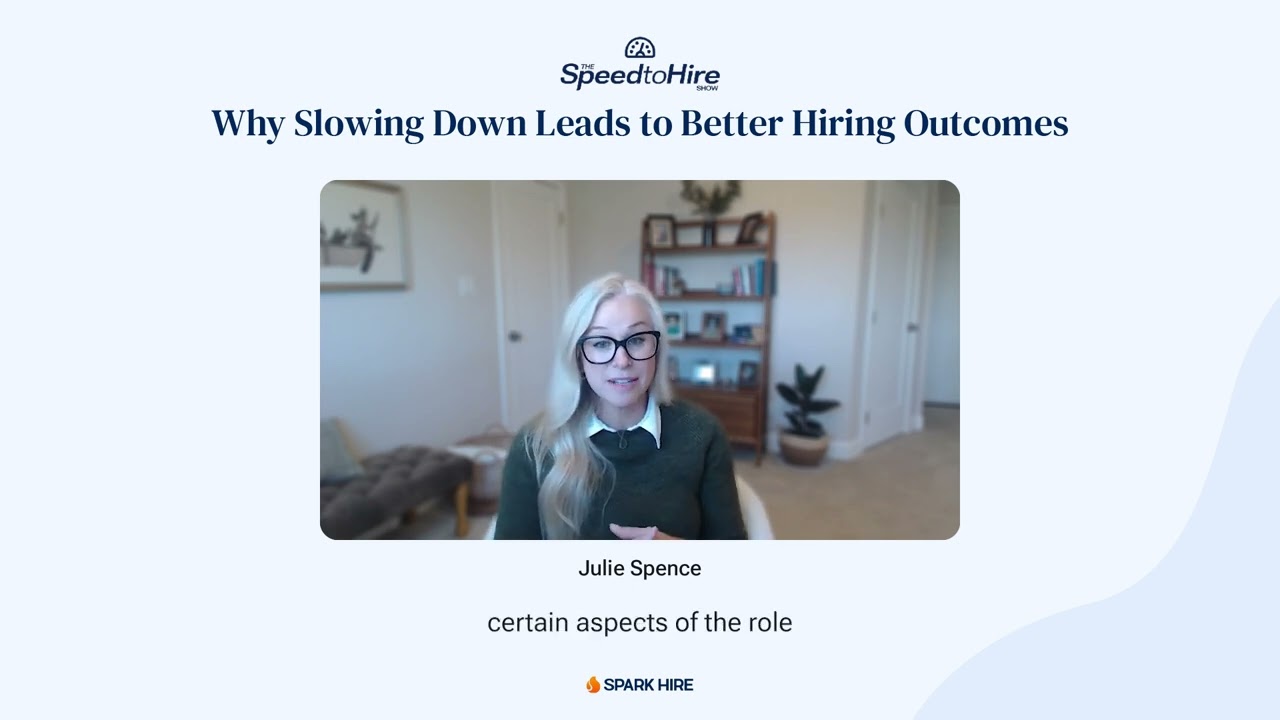
Scale + Soul: How to Grow While Preserving Your Culture
Scaling through acquisition can quietly erode culture. Hear Erin McAuley and Julie Spence of Springline Advisory on using hiring to keep it intact.
Recruiting Isn’t a Support Function It’s an Operational One
Rushed hiring rarely leads to good outcomes. Hear Sabrina Sanchez on why recruiting works best as an operational function, not an order-taking one.