
Make It Human: Use AI and Automation to Focus on What Matters
Ask any TA leader what a human-first hiring process actually looks like in practice, and the answers tend to be:
- Candidates feel seen, heard, and valued.
- Every qualified person gets a real opportunity
- The process is consistent, fair, and transparent
As HR and TA professionals, this is what you want to deliver.
The question worth asking is: can we actually deliver, given today’s hiring realities?
For most lean teams, the honest answer is: not consistently.
And, it’s not your fault. Applicant volume is up, resumes are nearly identical due to AI in both sides of the hiring process, and hiring manager collaboration remains a primary challenge.
Recruiting is one of those roles where the volume of the work can quietly undermine the quality of it, and that’s not a reflection of effort or intention. When you’re managing 200 applications across three open roles, giving every candidate a thorough review isn’t always possible, no matter how much you want to.
When you’re buried in the process, it’s hard to work on the process. AI and automation can help create the capacity to change that.
The framework below maps four stages of the hiring process, showcasing what AI, when done right, can do at each one, where humans must stay in the loop, and why the result is more aligned with a genuinely human-first, AI-assisted process than the manual version it replaces.
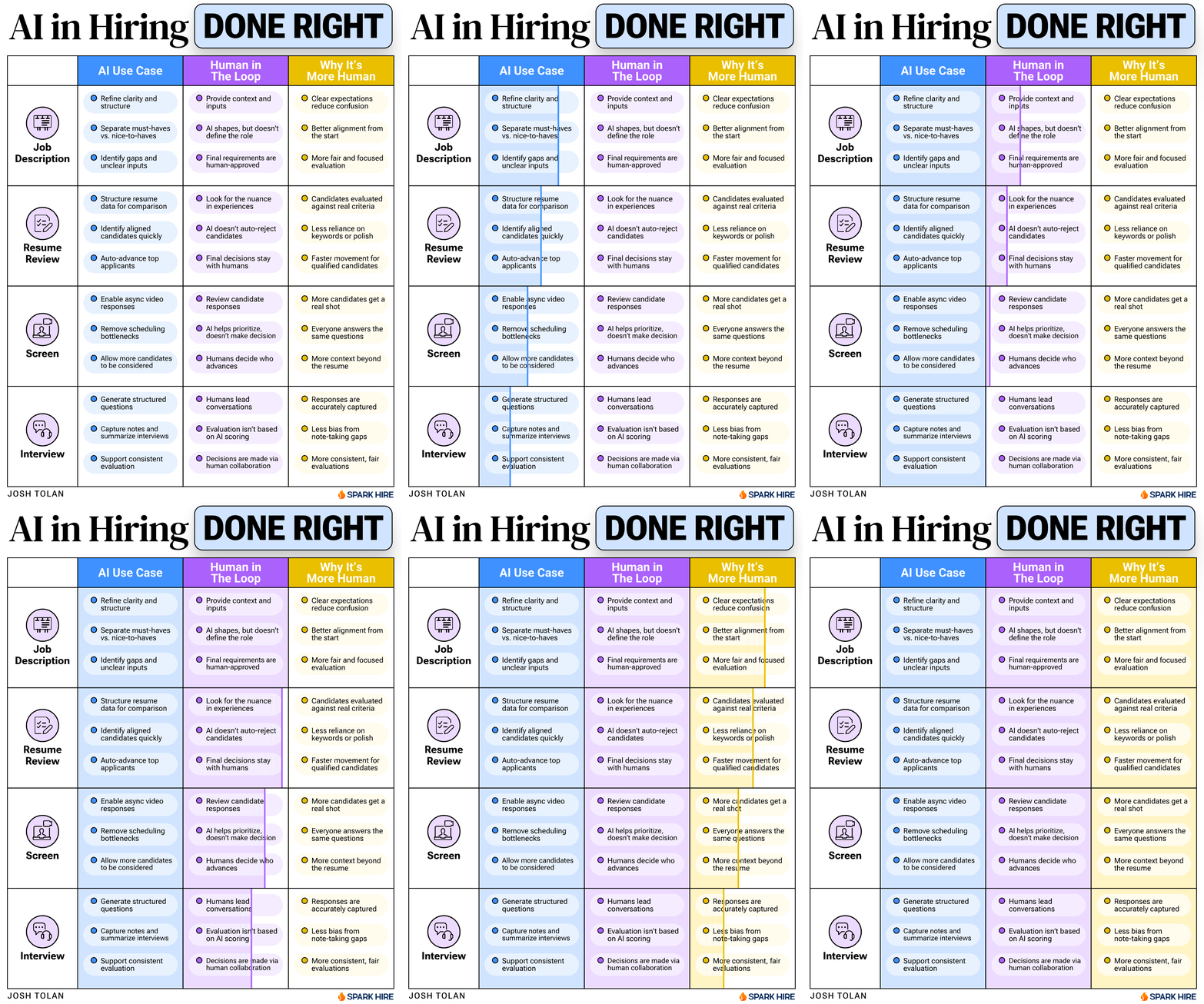
Where to Use AI to Improve Hiring
Job Description
- AI can refine clarity and structure, separate must-haves from nice-to-haves, and surface gaps or vague inputs before a role gets posted.
- Humans provide context and approve the final requirements, while AI shapes the document; it doesn’t define the role.
- The outcome: A job description that sets clearer expectations from the start, leads to better-aligned candidates, and a more focused evaluation process.
Resume Review
AI structures resume data for comparison, surfaces the most aligned candidates quickly, and can auto-shortlist top applicants so the strongest candidates don’t sit in a queue, while final decisions stay with the reviewer. The result is less reliance on keyword matching or resume polish, and faster movement for candidates who are actually qualified.
Screen
Asynchronous video responses (aka one-way video interviews) remove scheduling as a bottleneck and allow more candidates to be considered than a calendar-constrained phone screen process ever could. AI can help prioritize which responses to review first, while ultimately leaving the final decision of who advances to humans. Additionally, every candidate answers the same questions, making the evaluation more consistent and giving the team more context than a resume alone provides.
Interview
Humans lead the conversation and make all final decisions. AI generates structured questions, captures notes, and summarizes the conversation so interviewers can stay focused on the candidate rather than on documentation. The output is more accurate notes, less bias introduced by gaps in what different people remembered, and more consistent scoring across a candidate pool.
The Underlying Principle

AI in hiring isn’t a replacement for human judgement. It helps provide structure so human judgement can exist where it matters most.
When admin work is handled, when every candidate gets the same process, when notes are captured accurately, and evaluations are structured, the people in the process have more time and better information to make their final decisions.
Start with the outcome you’re trying to achieve, then work backward to the process that produces it. Intentional AI is part of that process.
AI isn’t replacing recruiters, but recruiters who know how to use it well are pulling ahead. Learn how to be one of them!