
Get Both Right: Candidate Experience and Hiring Outcomes Can Coexist
When you’re making process improvements, the candidate experience and business outcomes are sometimes positioned as competing priorities.
“Move faster,” and you risk cutting corners.
“Add more structure,” and you risk making the process feel impersonal.
“Give candidates more information upfront,” and you risk self-selecting the wrong people out.

Here’s the reality: the strongest hiring processes dont trade one for the other.
There is a hiring reality where a strong candidate experience and hiring results go hand-in-hand.
The decisions that improve your candidate experience also improve hiring outcomes. The same process that makes a candidate feel respected and seen will produce better information for the people making decisions.
We’ve built a framework based on five core stages of the hiring process. For each stage, we’ve identified the right priority and highlighted the downstream effect on both sides: what the candidate gains and what the hiring team gains.
The pattern holds across every stage: better process decisions don’t just benefit one side. They benefit both because the goals were never actually in conflict.
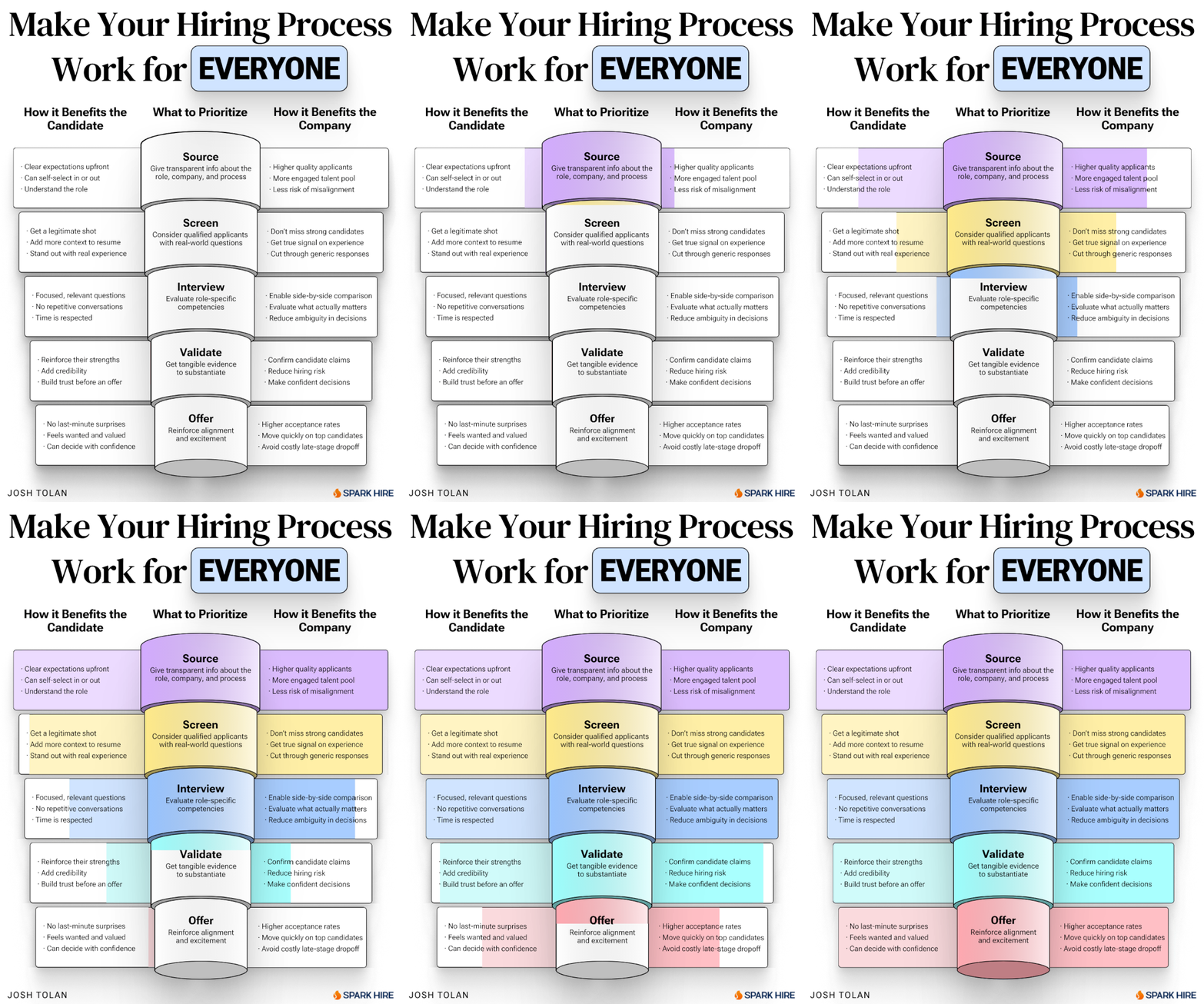
Building for Candidates and the Hiring Team Across Five Stages of Hiring
Give transparent information about the role, company, and process.
When candidates have clear expectations upfront, they can self-select more accurately. The ones who apply are more likely to be genuinely aligned, which reduces misalignment downstream and raises the quality of the applicant pool without additional screening. Transparency at the sourcing stage doesn’t just provide a good candidate experience; it’s a filter before anyone reviews a single application.
Consider qualified applicants with real-world questions.
Structured screening that asks for specific, role-relevant examples gives candidates a way to stand out beyond their resume. It also gives the hiring team an actual signal to work with rather than AI-polished summaries. The candidates who would have been overlooked by a keyword-matching approach get a real shot, and the candidates who look strong on paper but can’t speak to real experience get exposed earlier. Both outcomes serve the process.
Evaluate role-specific competencies.
Relevant questions that don’t repeat across conversations respect the candidate’s time and keep the experience from feeling disorganized. On the hiring team side, competency-based interviews produce more apples-to-apples comparable data, reduce ambiguity in decisions, and make feedback more about evidence rather than impressions.
Get tangible evidence to substantiate candidate claims.
For candidates, a thoughtful validation step reinforces their strengths and adds credibility to what they’ve said throughout the process. It builds trust before an offer rather than leaving open questions on both sides. For the hiring team, it confirms the claims that moved the candidate through the process, reduces the risk of a hire that looks different in the role than they did in the interview, and creates a stronger foundation for the offer conversation.
Reinforce alignment and excitement.
A candidate who reaches the offer stage without last-minute surprises, feels genuinely wanted, and has the information needed to make a confident decision is more likely to accept. A hiring team that treats the offer stage as a continuation of the candidate experience rather than a transaction loses fewer top candidates to competing offers and avoids the cost of late-stage dropout.
The Hiring Process Principle That Runs Throughout
Every stage in this framework has a clear priority. When teams get that priority right, there are benefits on both sides.
This model also helps make process improvements easier to prioritize internally. When a TA leader needs to make the business case for adding a structured screening step or investing in a better hiring system to improve hiring manager collaboration, the argument becomes layered: “This is better for candidates, and it reduces our time-to-close and acceptance rate at the same time.”
That’s a different conversation.
You don’t need to fix all five stages at once. Look at where your process is producing the worst experience for candidates, and you’ll usually find the same stage is producing the worst outcomes for your team. That’s the takeaway. That’s where to start.