
Evaluating Applicant Tracking Systems: The Most Common Mistakes When Choosing an ATS (and How to Avoid Them)
Most ATS platforms will check a lot of feature boxes.
And, if your evaluation is built around a feature checklist, you’ll end up with a list of vendors who all said yes and no meaningful way to separate them.
At that point, the decision usually comes down to price, brand recognition, or whichever demo you saw last. None of those are reliable filters for finding the right fit.
The ATS evaluation that actually works starts somewhere else: with two or three specific hiring problems your team is trying to solve, and a set of questions anchored to those problems. That approach gives every vendor something concrete to respond to, and gives you a basis for comparison that goes deeper than feature parity.
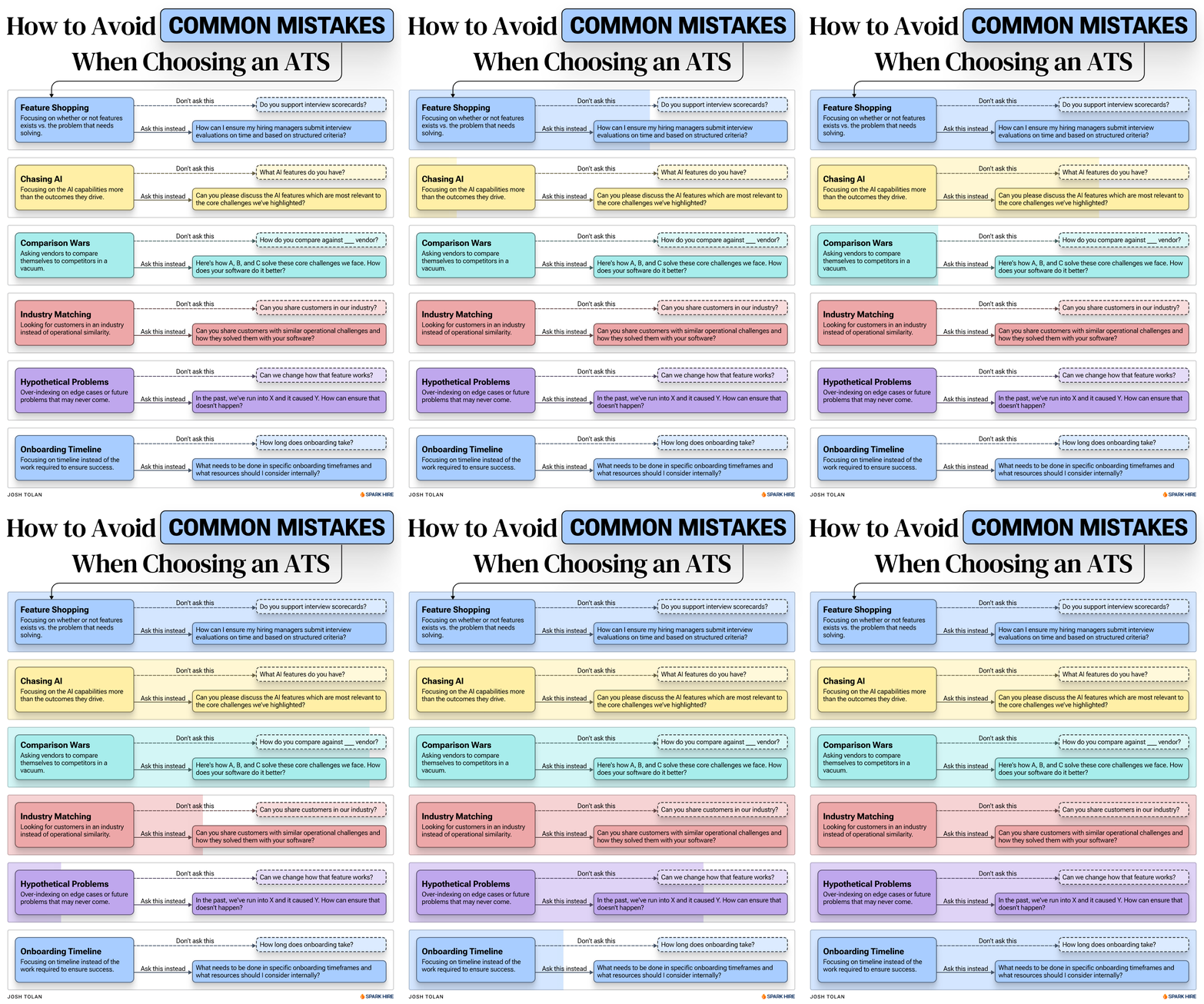
The Six Most Common ATS Evaluation Mistakes
Feature Shopping
Assessing on a feature-by-feature basis is one of the most common ATS evaluation mistakes.
❌ Asking whether a platform supports interview scorecards is a reasonable starting point, but it’s the wrong ending point.
✅ The better question is how the platform ensures hiring managers consistently submit structured feedback on time.
A scorecard that exists but never gets filled out doesn’t solve the problem. How the system prompts, reminds, and holds hiring managers accountable is what actually determines whether a solid structure is in place.
Chasing AI
Every ATS vendor is leading with AI capabilities right now, and most of them sound similar in a demo.
❌ The relevant question isn’t what AI features exist. AI that exists primarily to appear on a comparison checklist does nothing for you.
✅ The better question is which operational bottlenecks their AI features actually address for a team like yours. For example, AI that helps generate job descriptions or summarizes candidate feedback across five interviewers is actually useful.
Comparison Wars
This mistake produces a version of the same problem as feature shopping.
❌ Asking a vendor how they compare against their competitors puts the vendor in control of the narrative.
✅ A more grounded approach is to bring your actual hiring challenges to the conversation and ask each platform to show specifically how their software addresses them. This answer is more informative and context-aware than any vendor-produced comparison matrix or vague claims.
Industry Matching
A reasonable instinct, however, focusing on industry often leads evaluations in the wrong direction.
❌ A healthcare company asking for ATS references in healthcare may end up talking to organizations with completely different hiring structures, team sizes, and operational challenges.
✅ Similarity in hiring workflows is a more useful filter than industry. For example, a lean HR team at a logistics company and a lean HR team at a software company actually have more in common with each other than either does with an enterprise company in their own industry.
Hypothetical Problems
Lean hiring teams don’t have time to waste on ‘what ifs’ that should go toward current challenges.
❌ Over-indexing on what-ifs or future scenarios that may never materialize pulls attention away from the hiring problems that exist right now.
✅ Instead, bring specific past failures into the evaluation: here’s a situation we ran into, here’s what broke, here’s what we needed. Ask vendors to demonstrate how their platform handles it.
Onboarding Timeline
Asking how long onboarding takes is a reasonable question, but the timeline is less important than what’s involved in implementation.
❌ A 30-day implementation that requires significant internal effort from a team with no capacity to spare is a harder lift than a 60-day implementation with dedicated support doing most of the heavy lifting.
✅ Better questions include what needs to happen during onboarding, and what resources will my team need to bring to it?
The evaluation process is where many ATS investments quietly fall apart.
A platform that looked great in the demo but underperforms in practice is not typically due to a lack of features, but because the evaluation never surfaced how it would hold up against your team’s actual hiring challenges.
Anchoring every question to a real problem your team faces is the most reliable way to avoid that outcome.