
Why Your “Free” ATS isn’t Actually Free
Your HRIS already tracks employees, manages payroll, and handles onboarding. It has an ATS module built in. The perceived cost is very low or free; it keeps everything in one place, and it avoids adding another vendor to the stack.
For a lean HR team with a full plate, that seems reasonable.
The logic makes sense on the surface. But the problems show up when hiring actually starts.
Your HRIS is a post-hire solution. That’s its strength and core value prop.
But when it comes to the ATS module in your HRIS, it’s likely a secondary tool where what you get is something that checks the box but doesn’t actually help you hire.
For those running a process on the ATS inside your HR software, it probably looks something like:
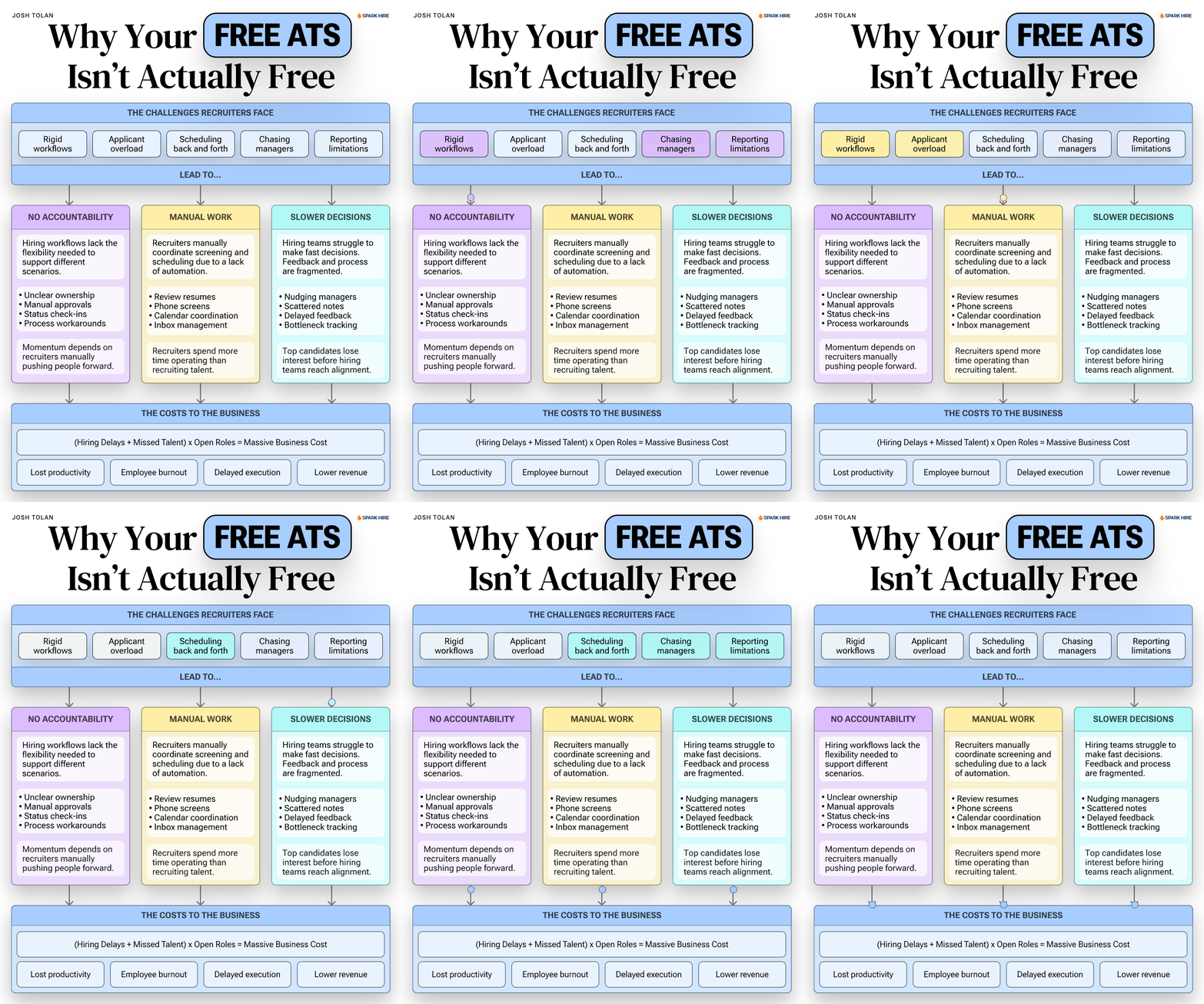
- Rigid workflows, built around a fixed set of stages that don’t adapt well to different roles or hiring processes
- High volumes of applications landing in a list, instead of flowing through automated filters
- Back-and-forth scheduling coordination because the tools for self-service scheduling either don’t exist or don’t work well
- Hiring managers who need a simple interface to find something that requires more from them than they’re willing to give, so they move outside the system, and you end up chasing people and feedback
Each of these workarounds has a cost.
The Cost of Working Around Your HR Software’s ATS
With every delay, the business cost of a poor hiring system compounds. Multiply these costs across a year of hiring, and the “free” ATS starts to look very different.
Hiring delays mean:
- Positions stay open longer
- Existing employees absorb more work
- More work without relief creates employee burnout
Each unfilled role carries a cost that extends well beyond the salary line:
- Lost productivity
- Delayed execution of work that depended on the hire
- Management time that goes into every part of a search.

When the workarounds outnumber the workflows, the system isn’t holding the process together. The recruiter is.
You likely know this, but the key to change is ensuring your stakeholders feel the pain as well. We’ll cover this later in the guide, but the “Fallout” section of the graphic above is a good place to start in translating your pains into how it impacts the business.