
How to Find the Right ATS
There are hundreds of applicant tracking systems, thousands of “best of” lists peppering the internet, and countless review sites that, in most cases, add more complexity and confusion to your search for the right ATS.
The result? Most ATS evaluations go wrong before they start.
Oftentimes, buyers waste a ton of time evaluating applicant tracking systems, either unable to make a decision or making the wrong decision, because they’re comparing tools that are built for very different organizations.
A 75-person company evaluating enterprise platforms and a 2,000-person company looking at SMB tools will both walk away frustrated, and for the same reason.
And, we see this so much more often than you’d think!
The reality is that the ATS market is one market with a lot of categories. Narrowing to the right category before comparing vendors saves time, reduces noise, and produces a much shorter, more useful list.
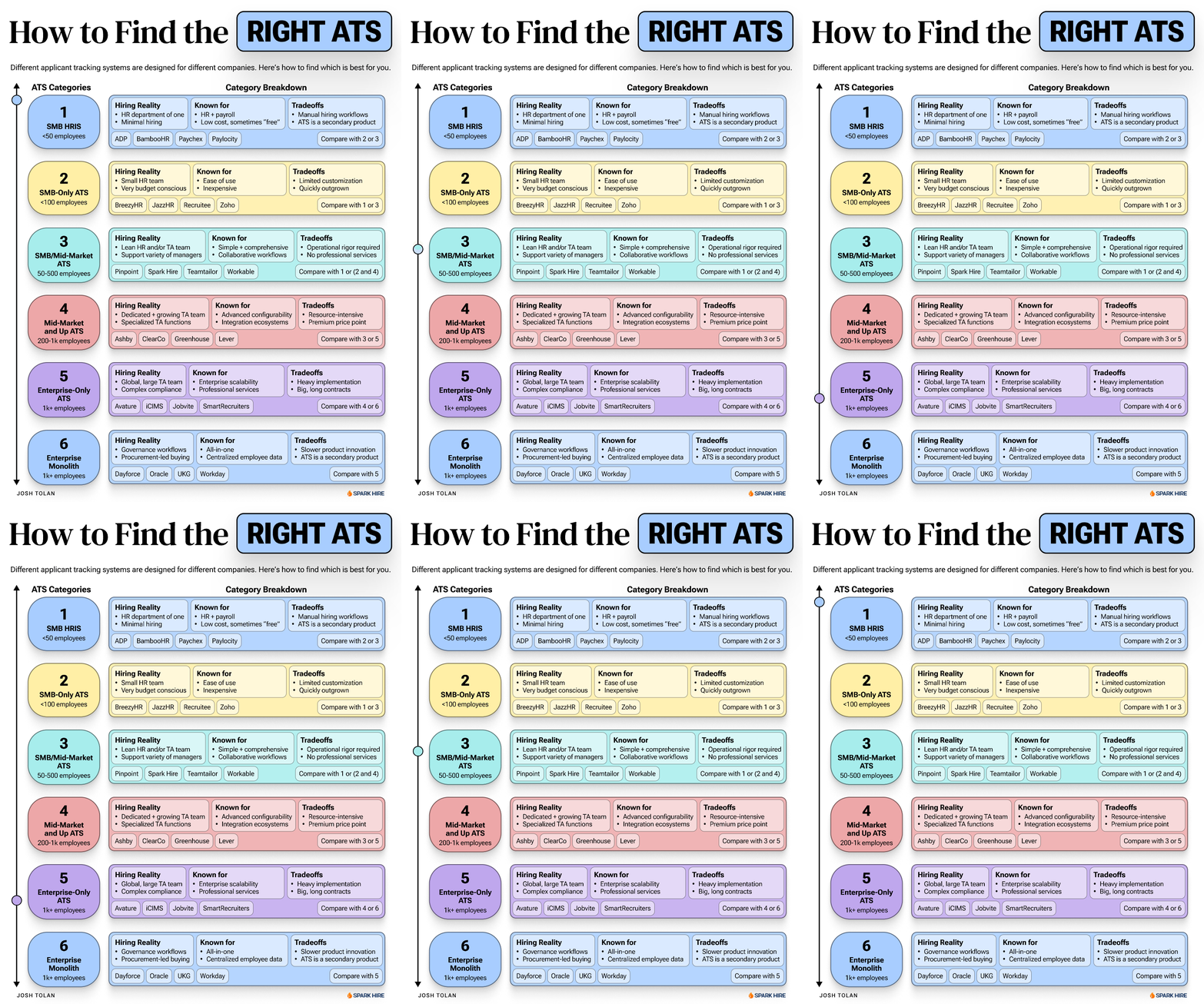
Most buyers approach the ATS market as if it’s one market. It isn’t.
The six categories below reflect meaningfully different product philosophies, target customers, and tradeoffs. The category names are anchored to the market segment each platform prioritizes, and while some vendors cross over, the distinctions hold up well enough to be a useful first filter.
The goal here isn’t to tell you which ATS is best, but to help you waste less time evaluating platforms that were never built for a team like yours, so the time you spend on demos and comparisons is actually useful.
Small-to-Medium Business (SMB) HRIS
Platforms like ADP, BambooHR, and Paylocity are excellent HR and payroll platforms, generally used by small and medium-sized businesses, with the ATS as a secondary component. For orgs with minimal hiring and a strong preference to consolidate, this can work. The tradeoff is that these ATS platforms don’t support much beyond a basic hiring process.
SMB-Only ATS
Platforms like JazzHR are built specifically for small HR teams, typically at companies with under 100 employees. They’re known for ease of use and inexpensive pricing. For teams that need something fast, simple, and affordable, this category is worth a look. The tradeoff, again, is limited customization; for teams that need more configurability or have hiring managers involved, these platforms may fall short.
SMB and Mid-market ATS
Platforms such as Spark Hire, Teamtailor, and Workable are designed for lean HR and TA teams that hire across a variety of roles and need hiring managers’ involvement. These platforms tend to offer collaborative workflows at a price point that works well for 50 to 500-employee companies. The tradeoffs for this category are that some operational rigor is required to take advantage of the customizable workflows, and they generally support many customers, so professional services are not available.
Mid-market and Up ATS
Platforms, including Greenhouse, Ashby, and Lever, are built for dedicated and growing TA teams, typically at companies with up to 1,000 employees, and often with specialized roles. They offer more advanced configurability and a wider range of integrations, but also come at a higher price point and require more resources, such as a Recruiting Operations team, to implement and maintain effectively.
Enterprise-Only ATS
Platforms like iCIMS are built for large TA teams at companies with 1,000 or more employees. They offer enterprise scalability and significant customer support in line with what more complex hiring operations require. For smaller teams, the implementation overhead, contract complexity, and cost structure rarely make sense.
Enterprise Monolith
Platforms, such as UKG, bundle ATS functionality into a broader HR, finance, or ERP suite. Known for centralized employee data and finance-adjacent HR processes, the tradeoff with this type of platform is that hiring is rarely a product priority, and innovation in the recruiting workflow tends to lag behind dedicated ATS platforms.
Each one of these was built for a specific hiring reality.
Here’s the honest point: evaluating a platform outside your ATS category doesn’t just waste time during the buying process; it often results in purchasing a tool that your team has to work around from day one.
Before shortlisting platforms, first identify which category fits your hiring reality.